
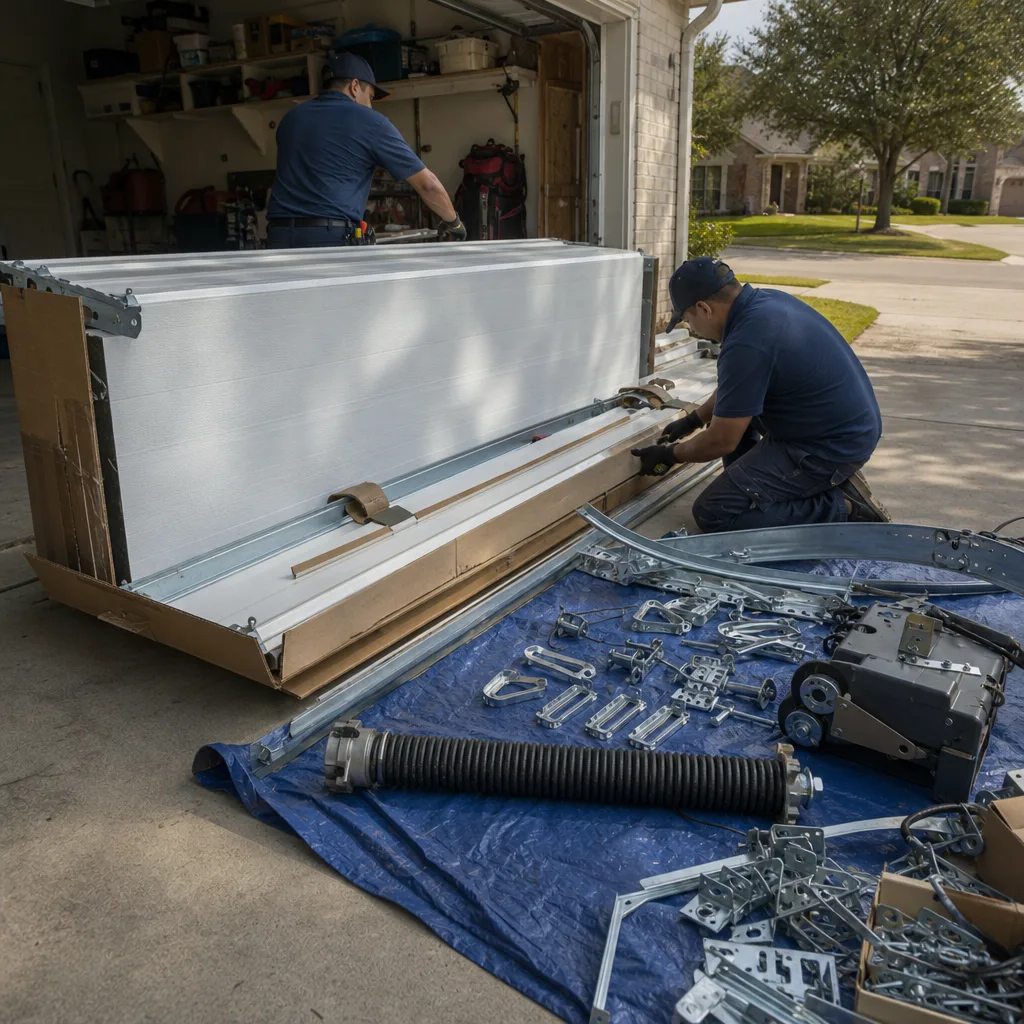
Last updated November 20, 2026
 Raised-panel steel
 Carriage house
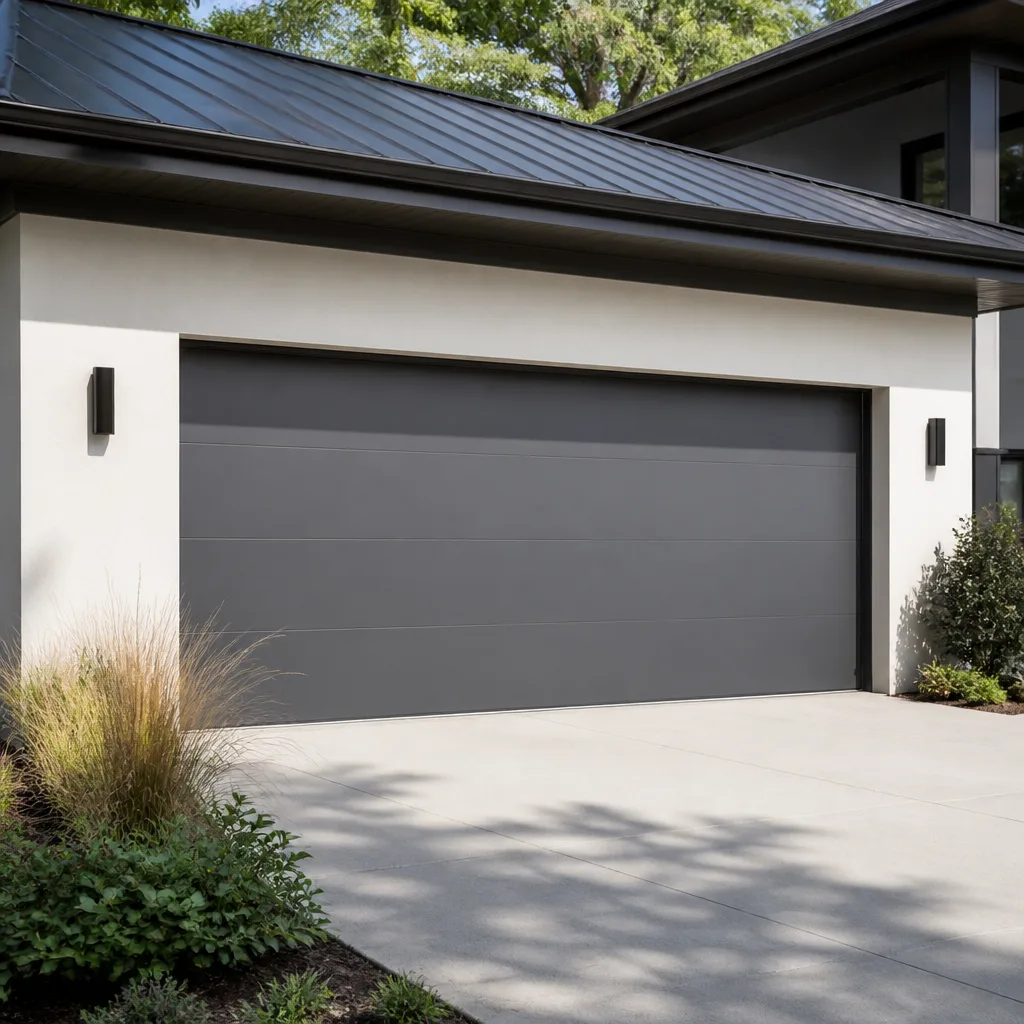 Modern flush
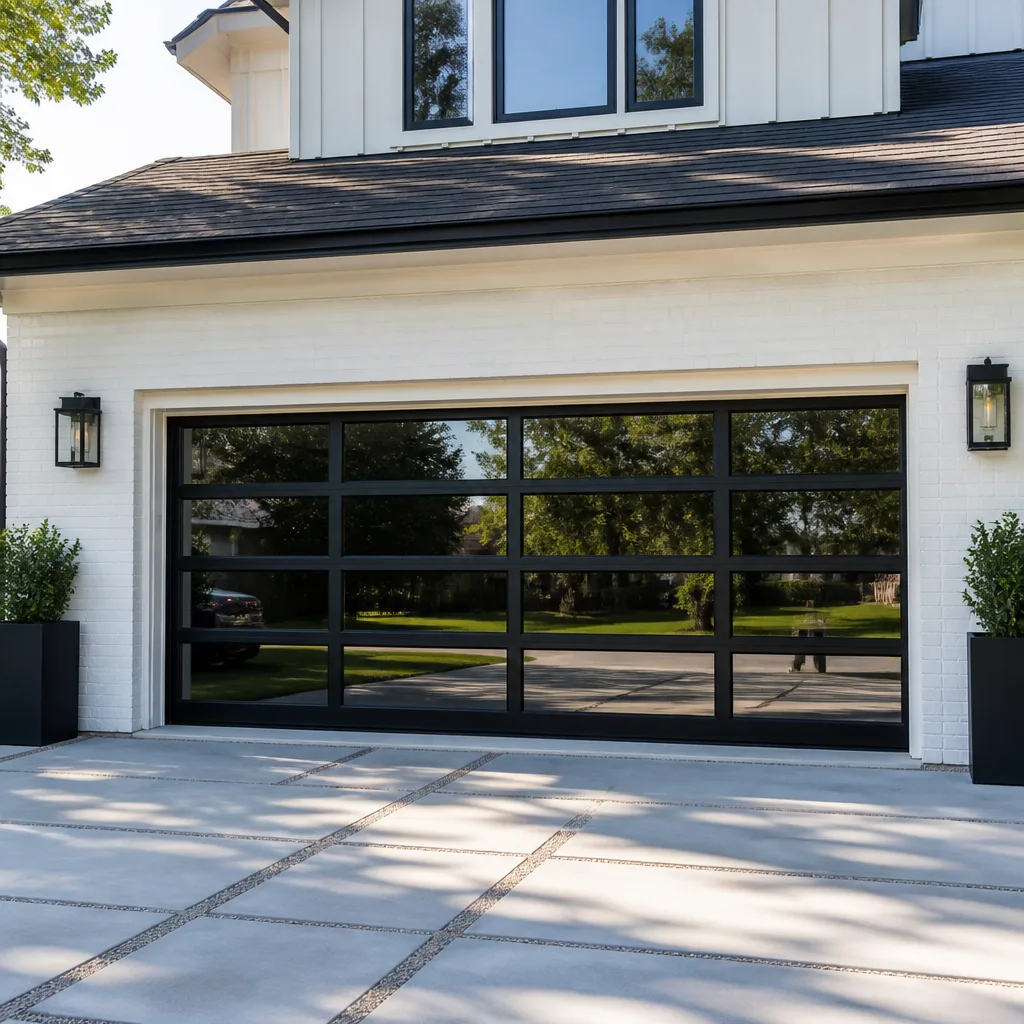 Full-view glass
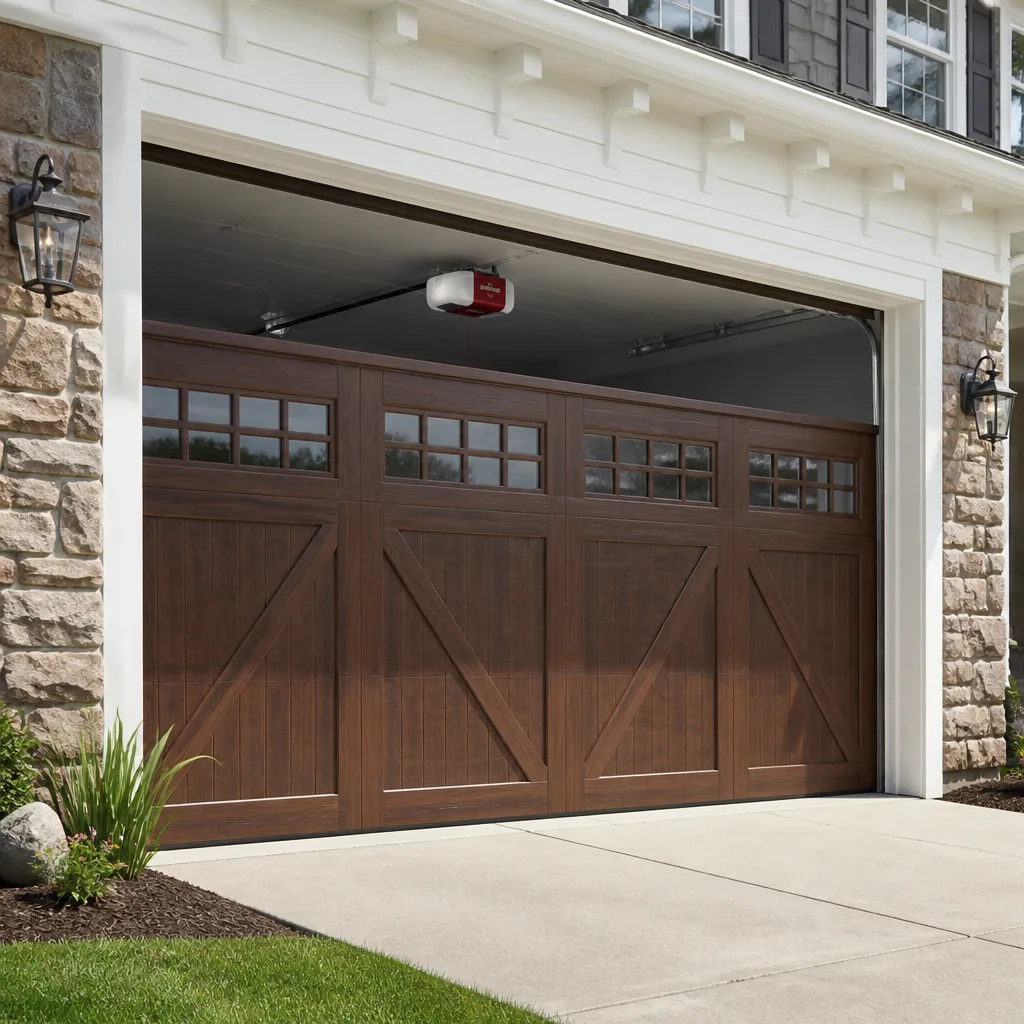 LiftMaster openers
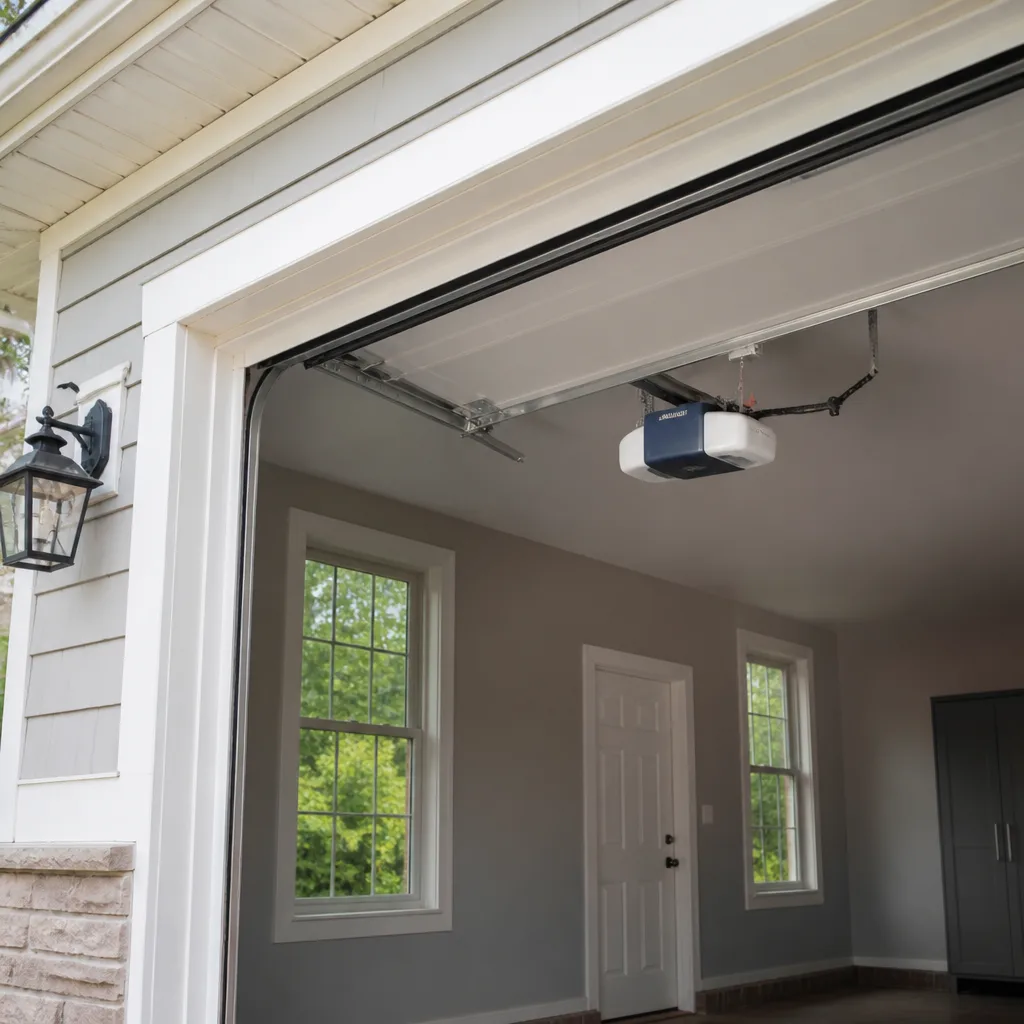 Chamberlain openers
Full 25-point door and opener safety check with every visit - springs, cables, rollers, tracks, and your LiftMaster or Chamberlain opener included
You get a price before we start. It does not change when the pro arrives.
Get your free estimateHow to Hire a Garage Door Contractor in Westchase: A Step-by-Step Guide
Any handyman can swap a panel. Almost no one should touch torsion springs without dedicated training, and most homeowners have no way to tell the difference until something goes wrong. That’s the strange gap in this trade: a garage door looks like a simple machine, so it attracts generalists who figure they can handle it with a socket set and a YouTube tab open. Then the spring work comes up, and the real question surfaces – who is actually qualified, and who is going to leave you holding the liability if the repair fails? This guide walks you through how to hire a garage door contractor in Westchase the way a specialist would tell you to do it: what to ask, what answers should end the conversation, how to read a quote, and how to spot the red flags that show up more often in the Houston metro than anywhere else.
Quick Answer
To hire a garage door contractor in Westchase, verify three things before anyone touches the door: that they specialize in garage doors rather than treating it as an add-on, that they hold current state licensing and liability insurance and will show you proof on request, and that their written quote itemizes parts by brand and covers both parts and labor in the warranty. Springs and cables are the two components that cause serious injury when handled by someone untrained, so a contractor who hesitates on spring work or subcontracts it out is not the right hire, no matter how good the price looks.
Styles & brands we work with
- Raised-panel steel
- Carriage house
- Modern flush
- Full-view glass
- LiftMaster openers
- Chamberlain openers
Table of Contents
- Specialist or Generalist? How to Tell Them Apart
- The Questions to Ask Before Anyone Touches Your Door
- Why Spring Work Is the Line in the Sand
- How to Read a Garage Door Quote
- Lead-Gen Sites and Door-to-Door Solicitors in the Houston Metro
- What a Real Warranty Covers, and What Voids It
- Brand Fluency: Why It Matters More Than You Think
- What’s Different About Hiring in Westchase
Specialist or Generalist? How to Tell Them Apart
Start with the simplest question you can ask a contractor: what percentage of their work is garage doors? A dedicated specialist will answer without flinching. A general handyman, an HVAC company with an expanded service menu, or a remodeling outfit that “also does doors” tends to describe garage door repair as one item in a longer list. That’s the tell.
Here’s why it matters. A garage door system is four interlocking subsystems: the door and panels, the torsion or extension spring assembly, the track and rollers, and the opener and its safety sensors. A generalist typically has skill in one or two of those – usually panel replacement and opener resets – but not the full set. When a problem crosses subsystems (say, an opener that keeps reversing because a spring has lost tension and the door is heavier than the motor expects), a generalist diagnoses the symptom in front of them and replaces the part they know how to replace. A specialist diagnoses the system.
Signs you’re talking to a specialist:
- They name specific brands without prompting. When we talk to a homeowner about a Wayne Dalton door or a Craftsman opener, the conversation shifts immediately to model-specific behavior. A generalist usually can’t get past “brand doesn’t matter.”
- They treat spring repair as a standard service, not a referral. If a contractor says “we don’t do springs, but I can recommend someone,” that’s honest – and it also tells you they aren’t a garage door specialist.
- They ask what the door does before they ask for your address. Diagnosis starts with behavior, not a schedule.
- They can explain why one part failed without blaming the whole system. A specialist isolates a failure; a generalist escalates to replacement.
If you’re in Westchase and you call a general handyman who says they can handle it, ask one more question: “If the torsion spring needs replacing, is that something you do in-house?” The answer usually settles the matter. If it doesn’t, ask what training the person who shows up has had on torsion spring replacement specifically. You’re not being difficult. You’re being the person who has to live with the result.
The Questions to Ask Before Anyone Touches Your Door
This is the part most homeowners skip. A few minutes of questions before the visit saves hours of argument afterward, and it separates the contractors you want from the ones who should never have been called. Ask these directly, and note how each one is answered – not just whether. A confident, specific answer is worth more than a fast one.
- “Are you licensed and insured for work in Texas, and can I see proof?” A legitimate contractor carries current liability insurance and will send you a certificate without hesitation. If they deflect, stall, or say “we’ve never needed it,” end the conversation. On spring work especially, an uninsured contractor’s mistake becomes your problem, sometimes with your own homeowner’s policy caught in the middle.
- “Is spring repair done by your technicians, or subcontracted?” If it’s subcontracted, ask who does it and how they were vetted. If it’s a shrug, walk away.
- “Do you carry the parts for my brand, or will you order them?” A specialist has or can source OEM-compatible parts for the brands in common residential use – LiftMaster, Chamberlain, Genie, Clopay, Amarr, Wayne Dalton, Craftsman, Raynor. A generalist orders from a supplier catalog and schedules a return trip while you wait.
- “Will you give me a written estimate before any work starts?” The answer must be yes. Not “we can ballpark it.” Not “we’ll tell you when we get there.” A written estimate before work begins is the only protection you have against the invoice surprise.
- “What does your warranty cover, and for how long?” The right answer names parts and labor separately. The wrong answer is “everything’s covered” with no detail.
- “What’s your process for testing the door after the repair?” A specialist will describe balance testing, safety sensor checks, and force adjustment verification. A generalist will look at you blankly.
What disqualifies a contractor immediately: refusal to show insurance, an insistence on cash with no written estimate, evasiveness about who does the spring work, and any pressure to decide on the spot. A specialist doesn’t need to pressure you. The work speaks for itself, and a written estimate is free. If the person on the phone is rushing you toward a same-day decision before they’ve even seen the door, that’s not confidence – that’s a sales tactic.
Why Spring Work Is the Line in the Sand
Springs are the most dangerous component in your garage door system. Torsion springs are held under hundreds of pounds of tension; if one is released incorrectly, the result can be a broken bone, a serious laceration, or worse. This is not a DIY repair, and it’s not a handyman repair either. The spring is the single job where the difference between a specialist and a generalist becomes a safety issue instead of a quality one.
Every high-quality garage door specialist should tell you the same thing: spring replacement is done by trained technicians using the right tools and the right technique for the door’s specific configuration. What to check when a contractor claims they handle springs:
- Do they ask about the door’s weight and current spring configuration before quoting? Springs are matched to door weight. A specialist won’t quote a spring replacement without knowing whether your door is a single-car or double-car door, and the type of spring (torsion vs. extension) in place.
- Do they quote a matched pair or a single spring? Springs wear together. A specialist will usually replace both at once and tell you why. A single-spring quote with a matched pair installed is a red flag; so is a single-spring quote that becomes a pair on the invoice.
- Do they mention that the cables should be inspected while the springs are off? Cables are under the same tension and age at the same rate. A specialist checks them. A generalist skips the step.
- Do they describe a tension-release procedure that takes more than a wrench? If the description sounds like something you could do with common tools, they’re not describing a real spring job.
In our experience working garage doors across Westchase, spring work is also the repair most often requested after another contractor has already been out. That’s not a knock on the other contractor – it’s the natural result of hiring someone who didn’t specialize. The trained approach to a spring replacement involves controlled tension release, verification of door balance after installation, and a safety check on the opener’s force limits. Skipping any of those steps leaves a door that can fail again, and the liability for a re-failure sits with the homeowner, not the contractor who did the first job.
This is the reason we treat spring repair as a core service instead of referring it out. It’s the highest-injury-risk job in the trade, and it’s the one where training versus no-training shows up immediately. If you’re calling around and a contractor is vague about springs, consider that the rest of their expertise may be similarly limited. Springs tell you what kind of shop you’re dealing with.
How to Read a Garage Door Quote
A quote is either a diagnostic document or a sales document, and the difference is visible in the line items. A specialist’s quote tells you what’s broken, what’s being replaced, what brand and model is going in, and what the labor covers. A generalist’s quote tends to be a single lump sum for “garage door repair” with no breakdown, which means you can’t verify what’s actually being done – or whether the parts installed match what you thought you were paying for.
What a specialist quote includes:
- Line-item parts with brand and model where relevant. “Torsion spring, matched pair, sized for door weight” is a real line item. “Springs” is not.
- Separate labor line so you can see whether the install is priced realistically for the work involved.
- Verification steps listed as included – balance test, safety sensor check, force adjustment. These are part of the job, not upsells.
- A written warranty summary that names what’s covered and for how long.
- The word “estimate” used correctly: it’s the price you’re quoted before work starts, and it holds unless you approve a change.
What a lump-sum bid hides: substituted components. A contractor who quotes a single number can install an off-brand spring, a lower-grade roller set, or a re-manufactured opener and charge the same as the brand-name version. You won’t know until the part fails early, and by then the warranty question is usually murky. If a contractor won’t itemize, ask them to. If they still won’t, find someone who will.
One more point on quotes: spring pricing is per spring. A matched pair costs roughly twice a single spring, and it’s usually replaced together because the two wear at the same rate. If you see a quote that appears to cover a pair but is priced like a single, ask which it is before you agree. The written estimate is the final word on the price; what’s on it should match what gets installed. For a broader look at what individual repairs typically involve, our garage door repair page breaks down the common failure modes and what each one calls for.
Lead-Gen Sites and Door-to-Door Solicitors in the Houston Metro
The Houston metro has one of the most active garage door lead-generation markets in the country. That’s not a criticism of the homeowners – it’s just how the market has developed. If you search for a garage door contractor in Westchase, you’ll get a first page full of sites that look local but aren’t. They collect your information, sell the lead to whichever contractor pays the most, and the technician who shows up may have no relationship to the site you called.
How to spot lead-gen sites and door-to-door solicitations:
- The site has no physical address and no ownership info. That’s not a privacy choice; it’s a business model. A legitimate contractor operating in a specific market will tell you who they are and where they’re licensed to work.
- The phone number is a redirect. Call it on a weekday afternoon and see whether the person who answers can describe the company’s services in detail or reads from a script.
- The price is suspiciously low, then climbs. A lead-gen contractor quotes a low number to win the appointment. The technician arrives, “discovers” additional problems, and the quote doubles. This is the single most common complaint pattern in this market.
- Door-to-door solicitations after major storms. The Houston area sees its share of severe weather, and with it a wave of out-of-town crews offering “same-day spring replacement” at the door. They’re rarely licensed, they’re rarely insured, and they’re gone before the warranty question comes up.
The alternative is straightforward: work with a contractor whose identity is clear, whose license and insurance you’ve verified, and who gives you a written estimate before touching the door. Our Westchase Garage Door Repair page explains how our service works and what to expect from a visit. If the contractor you’re evaluating can’t pass the same basic checks, that’s the answer.
What a Real Warranty Covers, and What Voids It
A warranty is only as good as its clauses, and most homeowners never read past the headline. “Lifetime warranty” on a garage door spring usually means lifetime of the spring, which is a defined period, not the lifetime of the house. “Full coverage” usually means parts only, with labor billed separately on the return trip. Read the fine print before you sign, and ask for the warranty terms in writing alongside the estimate.
What a legitimate warranty typically covers:
- Parts for a defined period (often the manufacturer’s warranty on the specific part), voided only by misuse, modification, or a repair done by someone else afterward.
- Labor for a defined period, usually shorter than the parts coverage.
- Callback service if the repair fails within the warranty window, at no charge for the return visit.
What voids a warranty, in language you’ll actually see in the clauses:
- “Alteration or modification by anyone other than the installing contractor.” Translation: if you or a handyman adjusts the door after installation and something fails, the warranty doesn’t apply.
- “Damage resulting from impact, misuse, or improper operation.” A door that’s been driven into, or operated with a broken spring, generally isn’t covered even if the failure looks unrelated.
- “Consequential or incidental damages excluded.” The warranty covers the part, not the car underneath the door or the damage to the frame when the door came down.
- “Warranty void if the door is operated with the operator disconnected.” A surprising number of failures fall into this category, so it’s worth confirming the coverage terms up front.
The right question to ask a contractor isn’t “do you have a warranty?” – it’s “what’s the specific part, the specific labor term, and what voids it?” If the answer is vague, the warranty is vague, and a vague warranty in a dispute is worth approximately nothing.
Brand Fluency: Why It Matters More Than You Think
Garage doors and openers have model-specific behavior, and a contractor who’s worked with your brand will diagnose faster and repair more cleanly. That’s not a sales pitch – it’s just how the trade works. A LiftMaster opener with a smart-home integration has a different troubleshooting path than a legacy Craftsman unit from decades back. A Raynor commercial-grade residential door uses different spring hardware than a Clopay panel door of similar weight.
This is why brand fluency is a useful hiring signal. A specialist who’s worked across LiftMaster, Chamberlain, Genie, Clopay, Amarr, Wayne Dalton, Craftsman, and Raynor has seen the failure patterns of each. That range means your door isn’t the first one of its kind they’ve worked on, and the parts are likely on hand or sourceable quickly. A generalist working across one brand or none is guessing, and the guess costs you a return visit.
What to ask a contractor about brand coverage:
- “Which brands do you work with regularly?” A specialist names several. A generalist names one or none.
- “Can you source OEM-compatible parts for my opener model, or only universal replacements?” The right answer covers both.
- “Have you worked on legacy openers as well as newer smart-home-integrated ones?” The answer tells you whether they cover the full installed base or only recent installations.
- “Does your warranty cover the specific part you’re installing, or only the workmanship?” The answer needs to be specific.
When you’re comparing contractors, brand fluency is often the fastest way to tell a specialist from a generalist before you’ve even talked about the door. For a deeper look at how brand knowledge translates into repair choices, our garage door opener repair page covers the diagnostics side. And for a full system replacement, garage door installation explains what the process involves when the right answer isn’t repair.
What’s Different About Hiring in Westchase
Westchase is a tight residential community inside the Houston metro, and that shapes hiring in ways that aren’t obvious from a search results page. The neighborhood has a mix of older single-family homes and newer construction, which means the garage door systems you’ll find in Westchase range from original installations to recent replacements. A contractor who works Westchase regularly sees both ends of that range, and that’s useful when they’re quoting your job.
A few things to keep in mind when hiring a garage door contractor in Westchase specifically:
- Older doors need a closer look. A door installed when the home was built may be due for a spring replacement and an opener update in the same visit. A specialist will identify which is urgent and which can wait – a generalist tends to recommend everything at once.
- HOA and community rules can affect exterior work. Westchase has active community associations, and exterior modifications may need approval. If you’re replacing panels or the full door, ask your contractor whether the installation is compliant with your community’s rules before you order. The contractor should know what questions to ask.
- The Houston heat affects springs and openers. Garage interiors in Westchase get hot through the summer, and heat accelerates wear on springs and opener components. A contractor who works in this market knows which parts fail first and how often to expect a spring replacement. That’s local knowledge, not generic advice.
- Traffic and scheduling vary by neighborhood. Westchase sits near major commercial corridors, so a contractor familiar with the area can better estimate when they’ll arrive. Ask whether they have other jobs scheduled nearby the same day – a specialist working other Westchase doors can often fit you in more easily.
One thing we’d add: local referrals matter more here than in a sprawling metro. Neighbors in Westchase tend to know which contractors they’ve used, and a personal recommendation from someone whose door is still working two years later is worth more than any online listing. Ask what their door is doing now, not just whether the contractor was nice.
Common Mistakes to Avoid
- Hiring the cheapest quote without asking what’s in it. The lowest price is often the one with off-brand parts and a warranty that doesn’t cover the labor. Ask for the itemized version and compare like for like.
- Skipping the insurance question because the visit is “small.” A spring repair isn’t small. If the technician is uninsured and injured on your property, or if a failure damages your car, the liability exposure sits with you.
- Letting a general handyman touch the spring because “he’s done it before.” Watching a video and having trained hands are not the same thing. Springs are the one part of this system where the wrong hire becomes a safety issue.
- Accepting a verbal estimate over the phone. A phone quote isn’t an estimate. A written estimate before work starts is what protects you from the invoice shock.
- Ignoring the warranty language until something breaks. Read it at the same time you read the quote. If the clause about “modification by anyone other than the installing contractor” is in there, ask how it affects your use of the door going forward.
- Assuming a “local” site is local. In the Houston metro, many garage door sites are lead-gen portals with no Westchase presence. Call the number and ask who they are before you commit to an appointment.
- Skipping the post-repair check. A door should be balance-tested and its safety sensors verified after any spring or opener repair. If the technician leaves without doing that, the job isn’t finished.
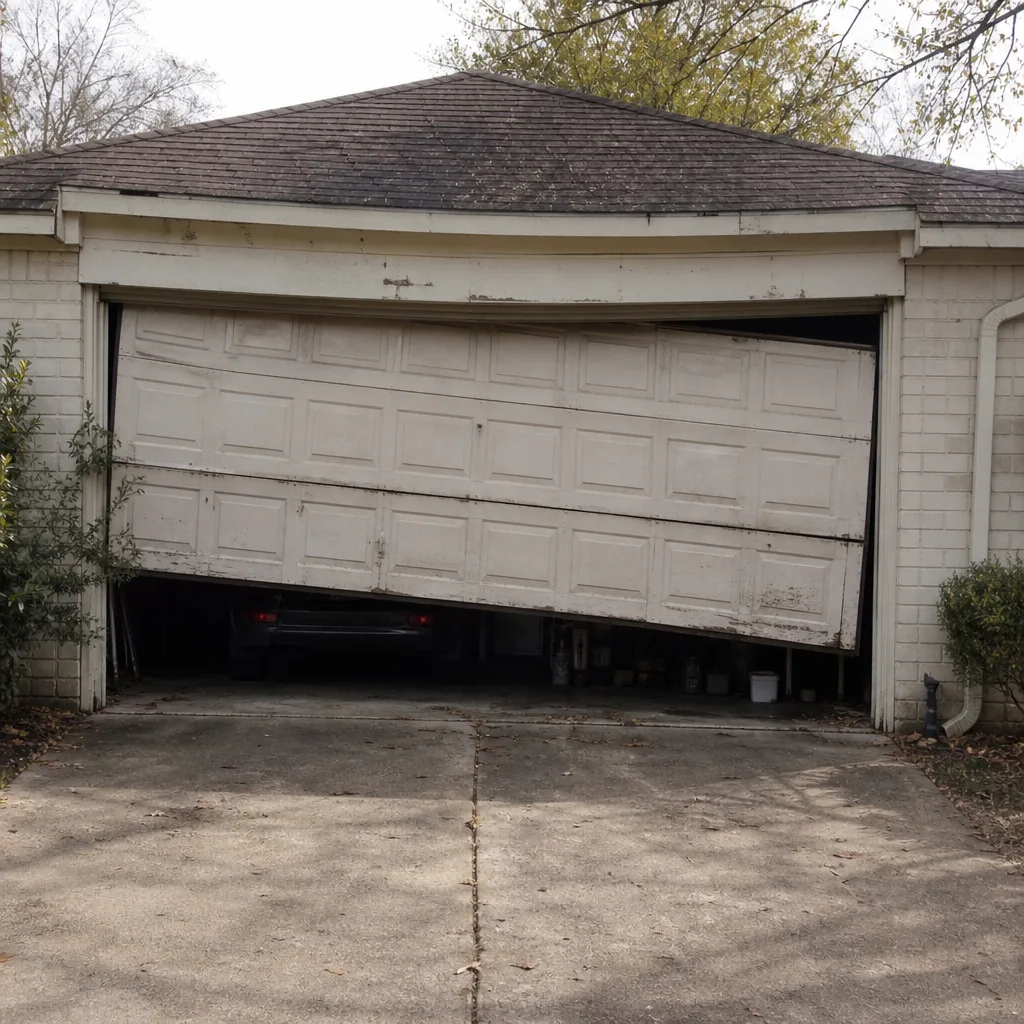
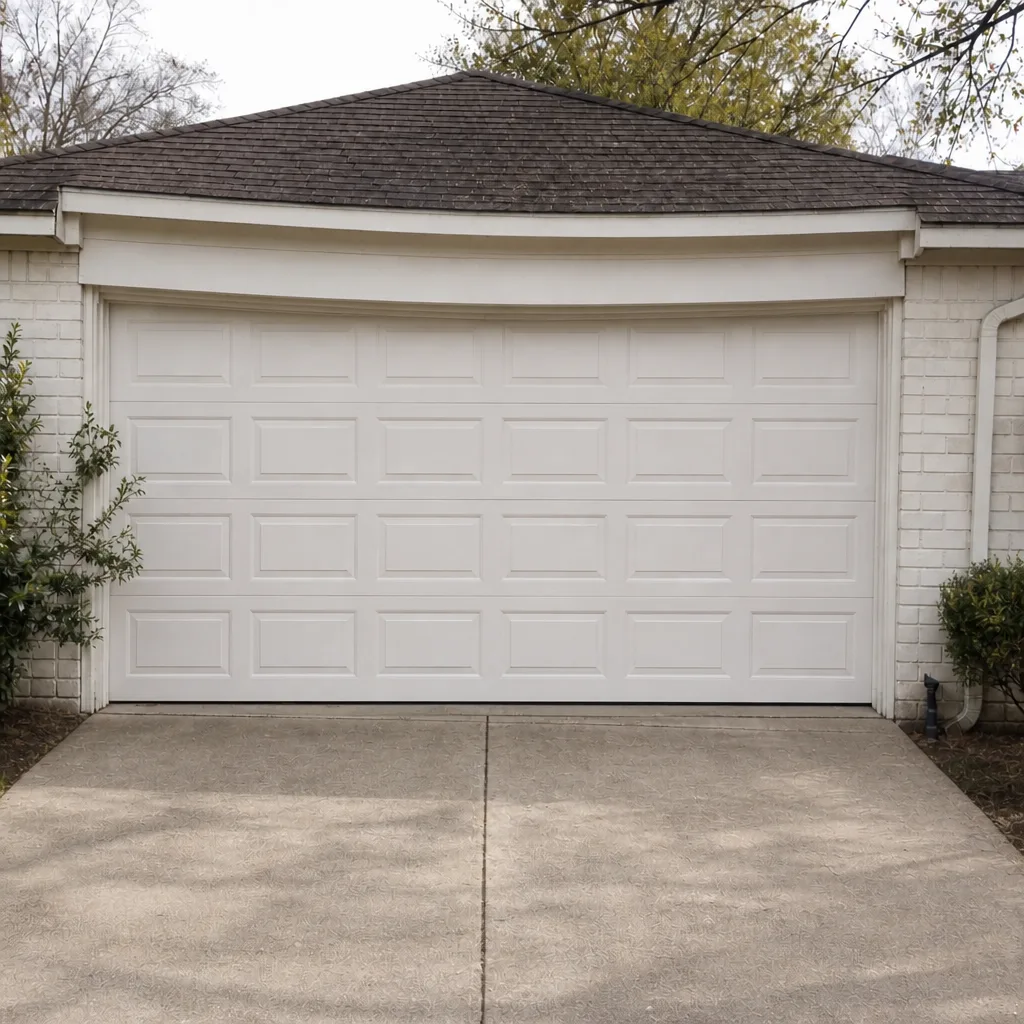
See the difference
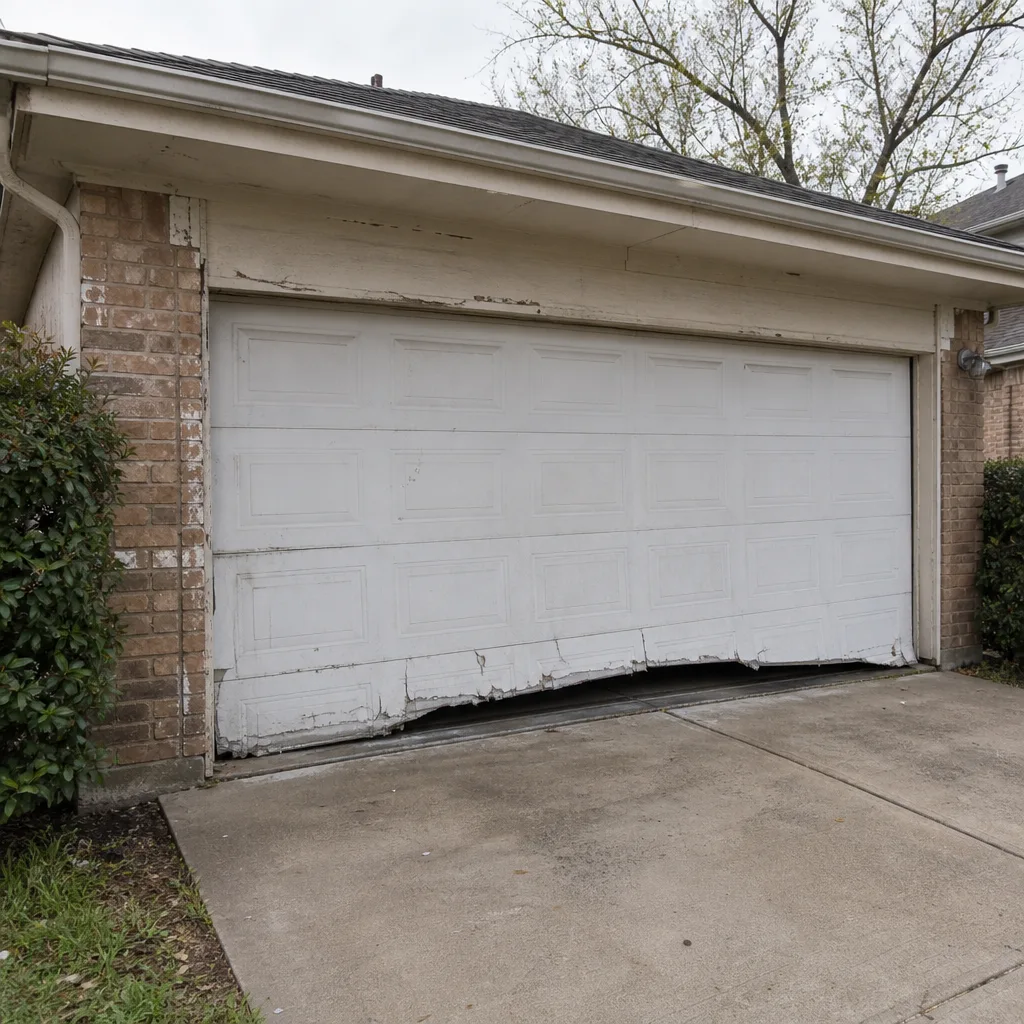 Before
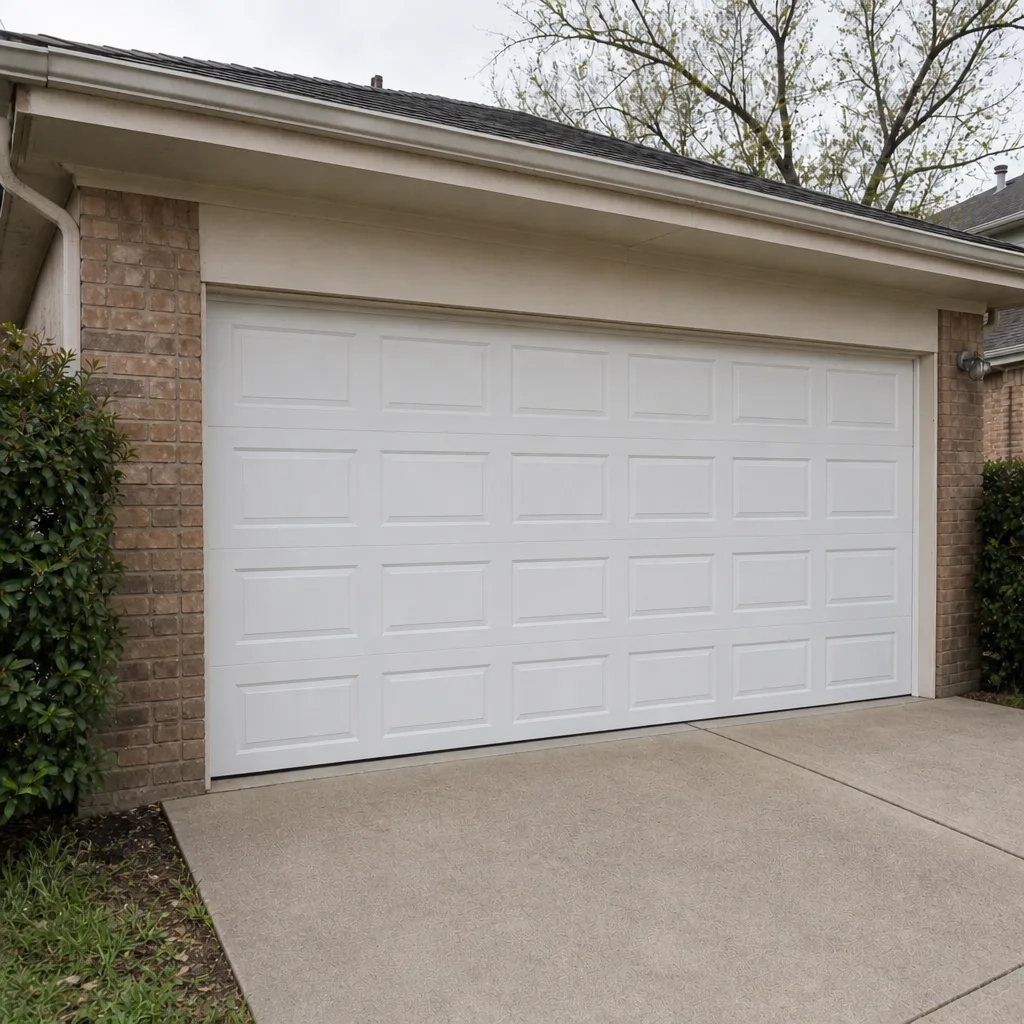 After
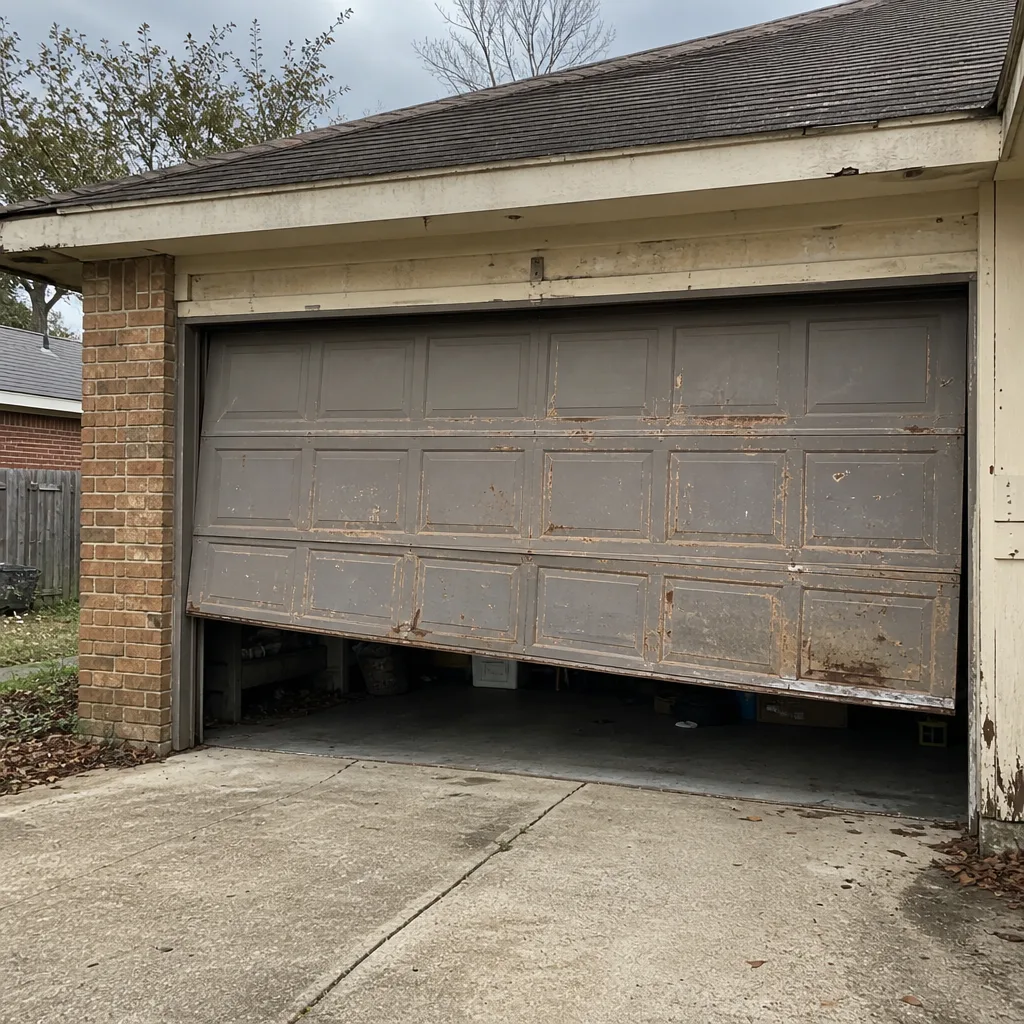 Before
 After
 Before
 After
When to Call a Professional
Some garage door problems are genuinely minor and can wait – a noisy roller, a misaligned track, a remote that needs re-pairing. Others aren’t. Call a professional today if the door won’t stay up on its own, if you hear a loud snap from the spring area, if the opener reverses before the door closes fully, or if the cables look slack or kinked. Those are all signs that a component is under failure load, and a door in that condition can come down without warning.
Spring replacement, cable work, and opener force adjustment all fall into the professional-only category. If you’re wondering whether your situation qualifies, the honest answer is usually to call rather than to guess. Westchase Garage Door Repair offers free estimates in Westchase – call (866) 690-3896. We answer 24/7, and fast dispatch from 7am to 7pm, Sunday through Friday, means a real conversation about the door is usually a few minutes away.
Frequently Asked Questions
Ask what percentage of their work is garage doors and whether they do spring repair in-house. A specialist answers both questions immediately and specifically; a generalist hedges or says they’ll “have someone take a look.” You can also check whether they carry or can source OEM-compatible parts for your specific brand – a specialist will name the brands they work with, including LiftMaster, Chamberlain, Genie, Clopay, Amarr, Wayne Dalton, Craftsman, and Raynor, without being prompted.
No, and they shouldn’t try. Torsion springs are under hundreds of pounds of tension, and improper release can cause serious injury. This is not a DIY or general-handyman repair – it requires training and the right tools, and it’s the job where a non-specialist is most likely to cause harm. If a handyman offers to do spring work, decline and call a specialist.
It shouldn’t. A legitimate contractor gives you a written estimate before any work starts, and the written estimate is the price you pay unless you approve a change. If a contractor refuses to give a written estimate or tells you the price will “depend on what we find,” that’s a red flag – it’s the pattern most commonly reported with lead-gen services in the Houston area. Get the estimate in writing before anyone starts work.
The right contractor is licensed and insured as the state of Texas requires, and will show you proof on request. Ask for the certificate before the visit, not after. If a contractor dodges the question or says “we’ve been doing this for years, don’t worry about it,” that’s the moment to end the conversation. On spring work specifically, uninsured contractors create liability that follows you, not them.
It varies by contractor and by the spring installed. Ask specifically what the parts warranty covers, what the labor warranty covers, and what language voids it – most commonly modification or repair by anyone other than the installing contractor, and operation of the door after a known failure. A real warranty names the terms in writing at the time of the estimate, not after the repair.
Yes. We handle the full service spectrum under one company: garage door repair, opener repair, new installation, parts replacement, and spring work. That means no handoffs to a second contractor mid-job, and no waiting on a supplier while your door sits non-functional. Call (866) 690-3896 for a free estimate – estimates are free and the price is set by the written estimate before any work starts.
The Bottom Line
The difference between a garage door specialist and a generalist isn’t marketing language – it’s liability, safety, and a job done completely the first time. In Westchase specifically, that gap is worth paying attention to: the Houston metro’s lead-gen market is active, door-to-door solicitation follows storms, and the spring work that needs a trained specialist is exactly the work a generalist shouldn’t touch. Verify licensing and insurance, ask about spring expertise, demand a written itemized estimate, and read the warranty before you sign. If the contractor you’re evaluating can’t pass those checks, keep calling. If you want a specialist who covers the full system – eight brands, spring work in-house, parts on hand – we’re one call away. Call (866) 690-3896 for a free estimate. We answer 24/7. Fast dispatch from 7am to 7pm, Sunday through Friday.
Written by the team at Westchase Garage Door Repair.