
Last updated November 20, 2026
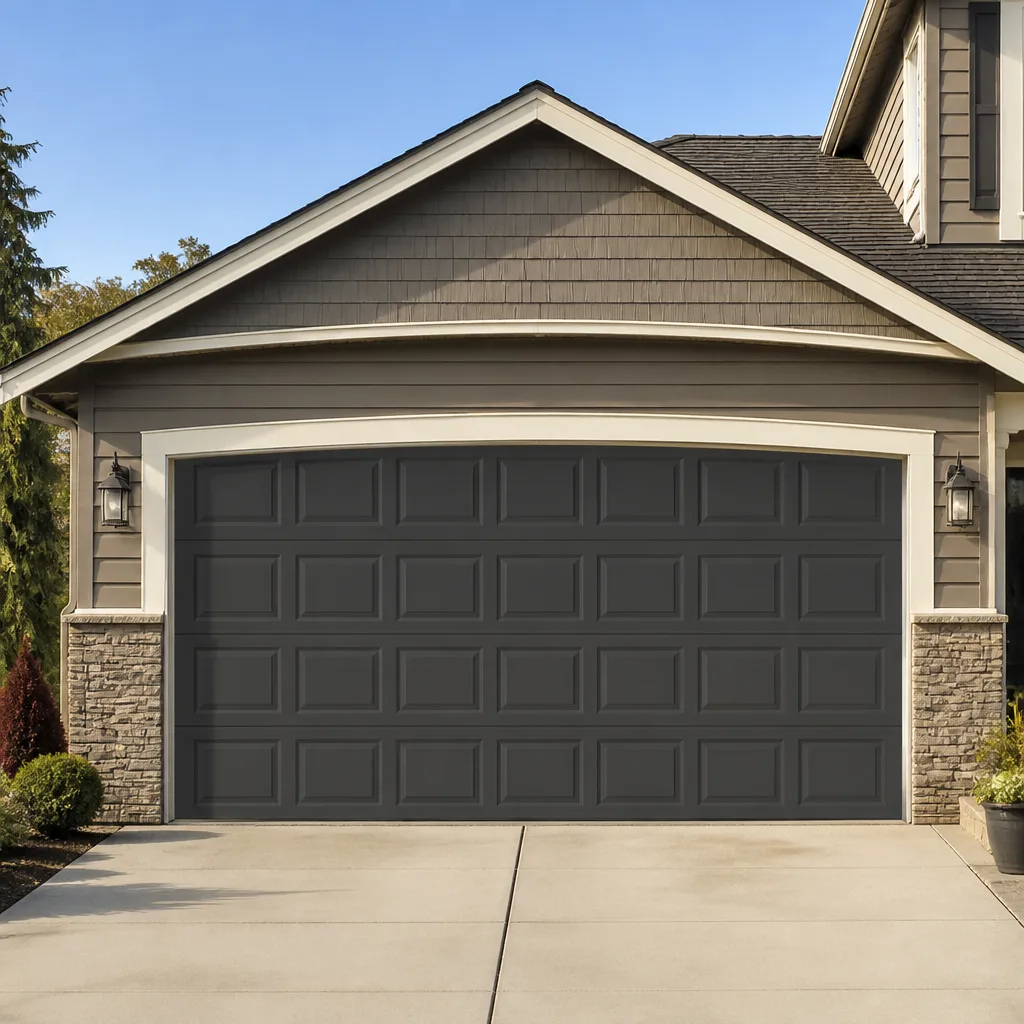 Raised-panel steel
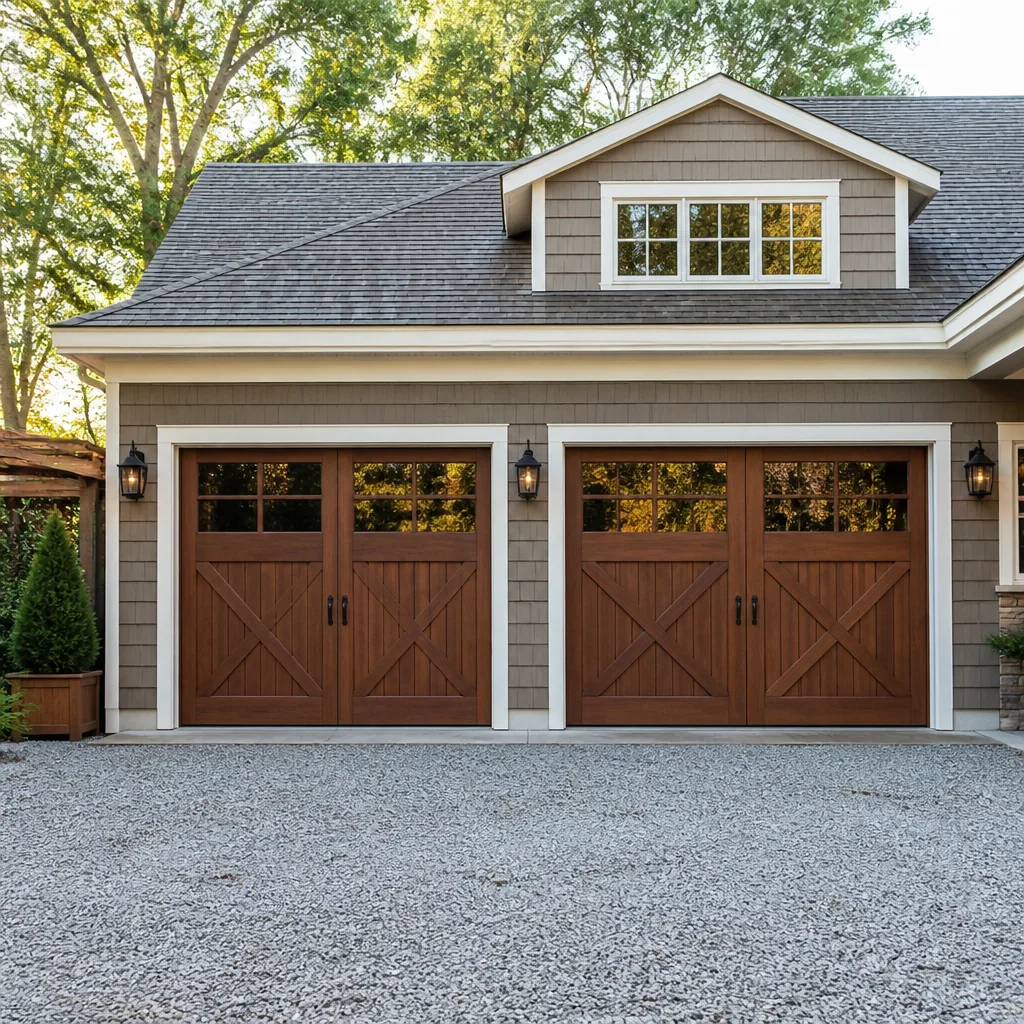 Carriage house
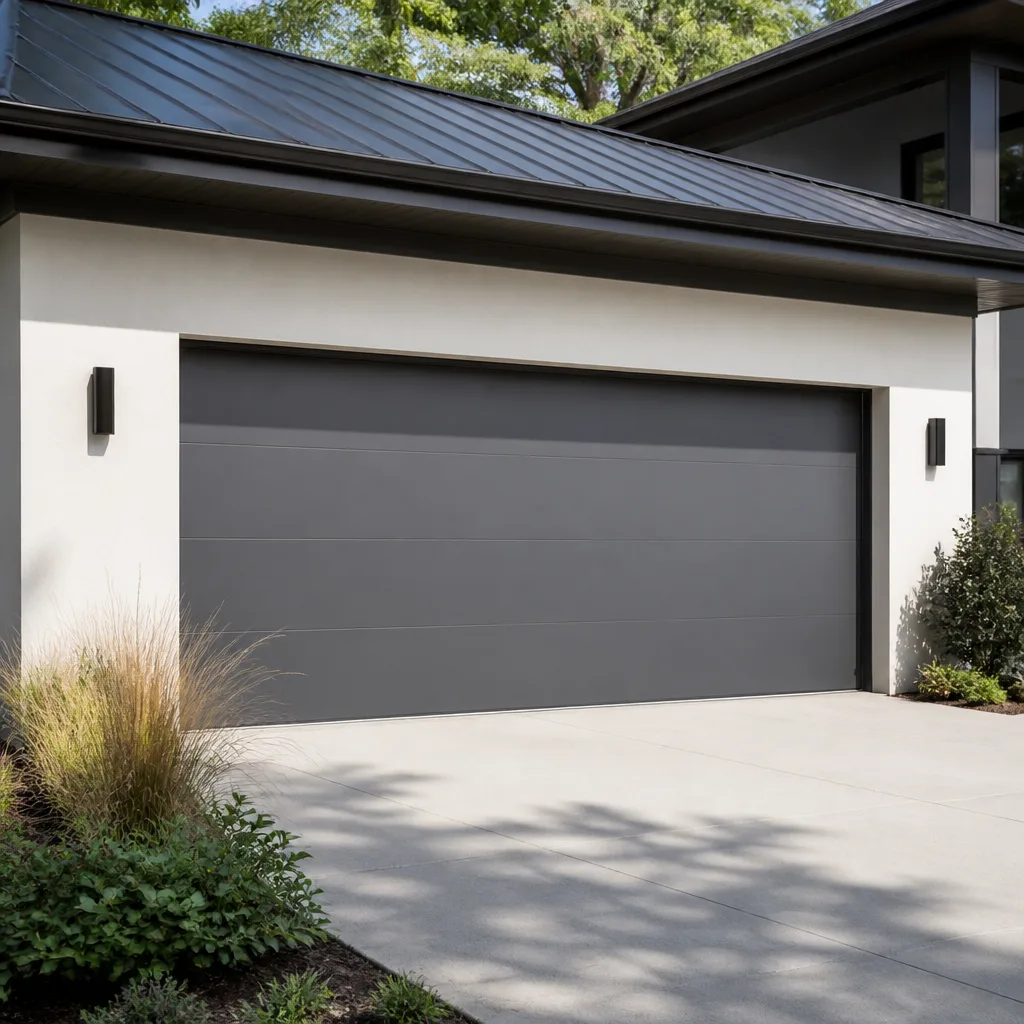 Modern flush
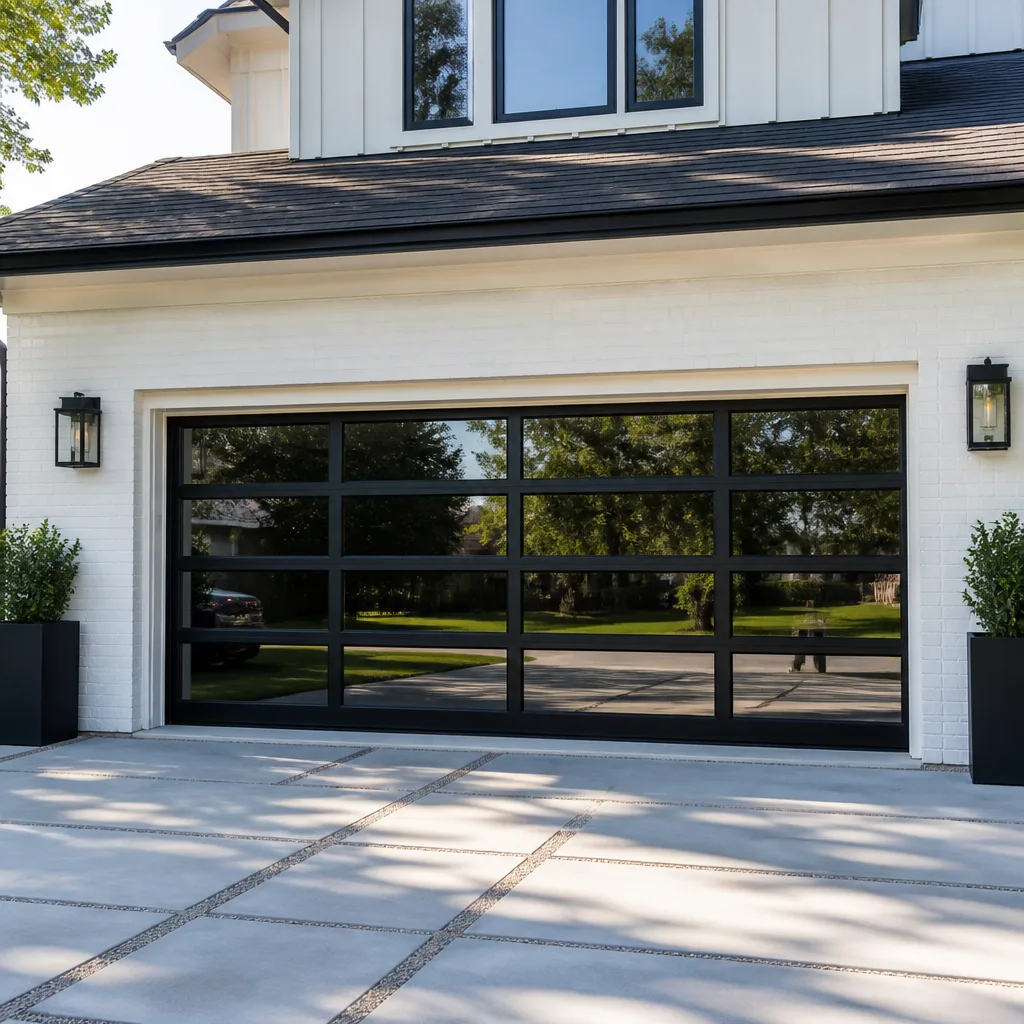 Full-view glass
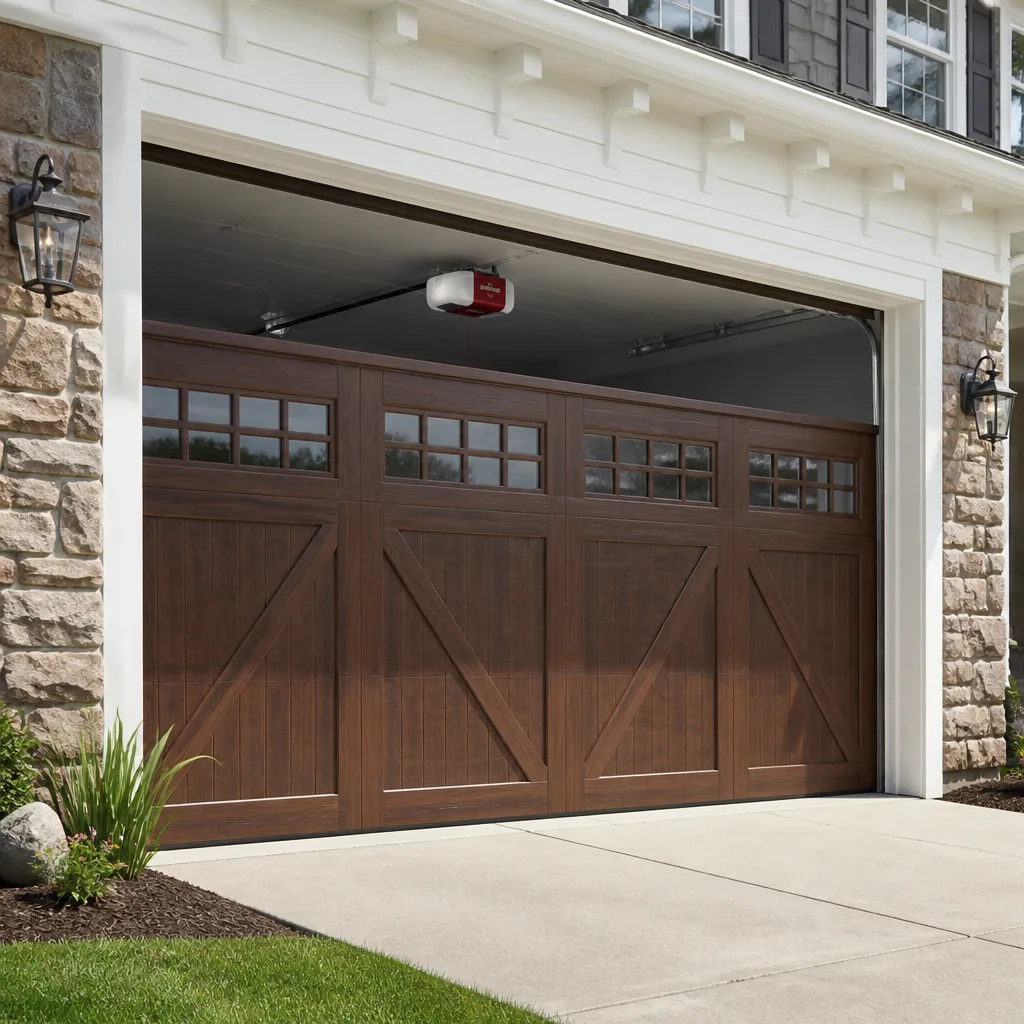 LiftMaster openers
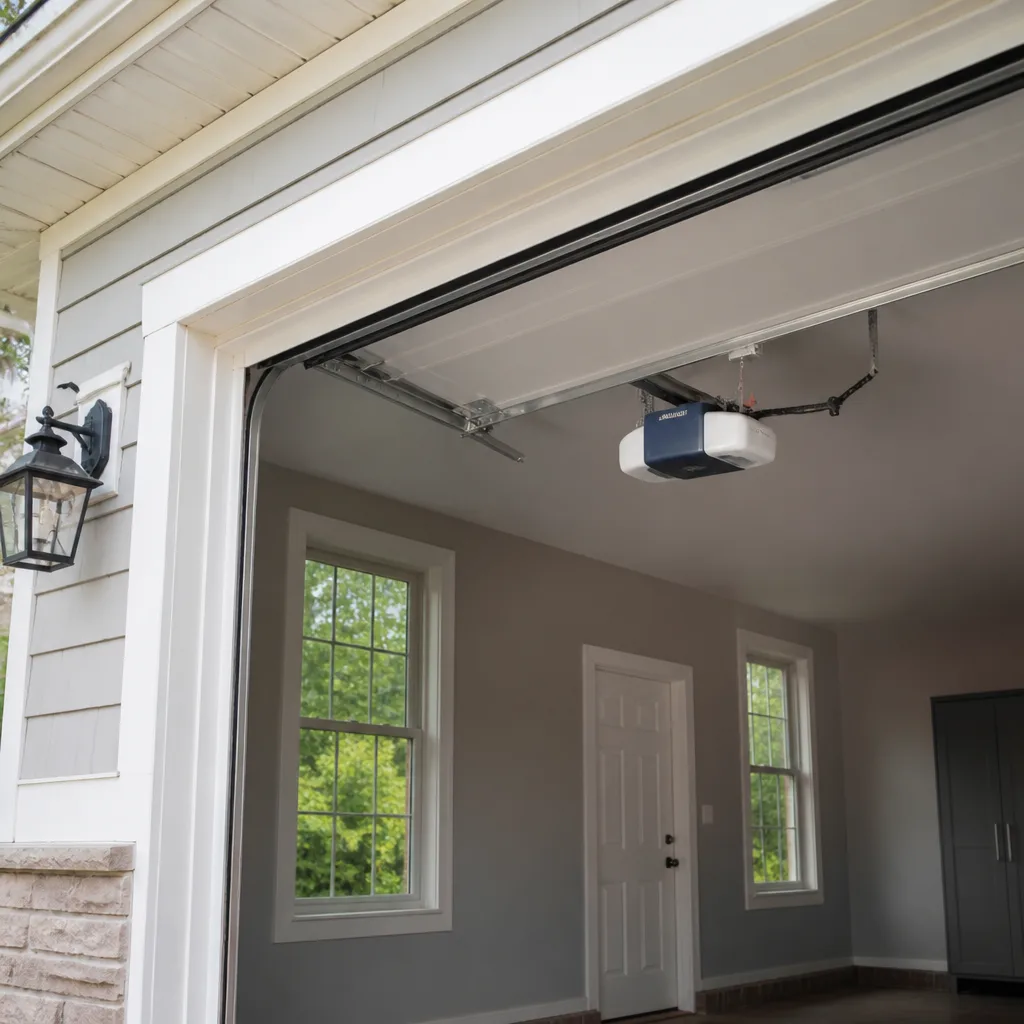 Chamberlain openers
Full 25-point door and opener safety check with every visit - springs, cables, rollers, tracks, and your LiftMaster or Chamberlain opener included
You get a price before we start. It does not change when the pro arrives.
Get your free estimateThe Complete Guide to Garage Doors in Westchase
The average Westchase garage door system has 14 moving parts. Most repair guides cover three of them. They talk about the opener, the springs, and maybe the panels, then stop. That leaves the torsion tube, the drums, the hinges, the rollers, the bottom seal, the track brackets, and the safety sensors completely unaddressed, which is strange when you consider that any one of them failing can take the whole system down or, worse, create a hazard.
This guide maps the full system part by part and explains which components fail faster in Westchase than they do in other parts of the country, and why. You’ll learn how Houston-area humidity changes the failure timeline, how HOA rules in Westchase subdivisions constrain what you can install, and how to decide whether a repair is worth doing or whether you’re throwing money at a door that’s nearing the end. No filler. Just the information a homeowner actually needs.
Quick Answer
A garage door in Westchase is a system of eight interdependent components, and three of them – springs, tracks, and bottom seals – wear faster here than the national average because of Gulf Coast humidity and slab-on-grade construction. Most repairs are straightforward and can be resolved in a single visit by a specialist who carries the right parts. The decision between repairing and replacing usually comes down to the door’s structural condition and how many major components are nearing the end of their service life at the same time.
Styles & brands we work with
- Raised-panel steel
- Carriage house
- Modern flush
- Full-view glass
- LiftMaster openers
- Chamberlain openers
Table of Contents
- The Eight Systems Inside Your Garage Door
- How Westchase Humidity Changes the Failure Timeline
- Why Slab-On-Grade Construction Affects Your Bottom Seal
- HOA Rules and What They Mean for Replacement
- Brand Prevalence and Regional Failure Patterns in Westchase
- Opener Technology: Legacy Systems vs. Smart Platforms
- Repair or Replace? A Decision Framework
- What Routine Care Actually Prevents
The Eight Systems Inside Your Garage Door
A garage door looks like one object. It’s actually eight separate systems working in coordination, and each one has its own failure mode, its own service life, and its own implications for safety and cost.
1. The springs. Either torsion (mounted on a shaft above the door) or extension (running along the horizontal tracks). Springs store the energy that counterbalances the door’s weight. They’re the most dangerous component in the entire system. A torsion spring under load can cause serious injury if it releases unexpectedly, which is why spring work belongs to a trained technician, not a homeowner with a winding bar and a video tutorial. Springs are the highest-injury-risk job in this trade, and it’s a job we handle as a standard service rather than referring it out.
2. The cables. Steel cables run from the bottom brackets to the drums and work with the springs to lift the door. A frayed cable is a snap waiting to happen.
3. The tracks. Vertical and horizontal rails guide the door’s travel. Bent tracks cause binding; rusty tracks cause drag.
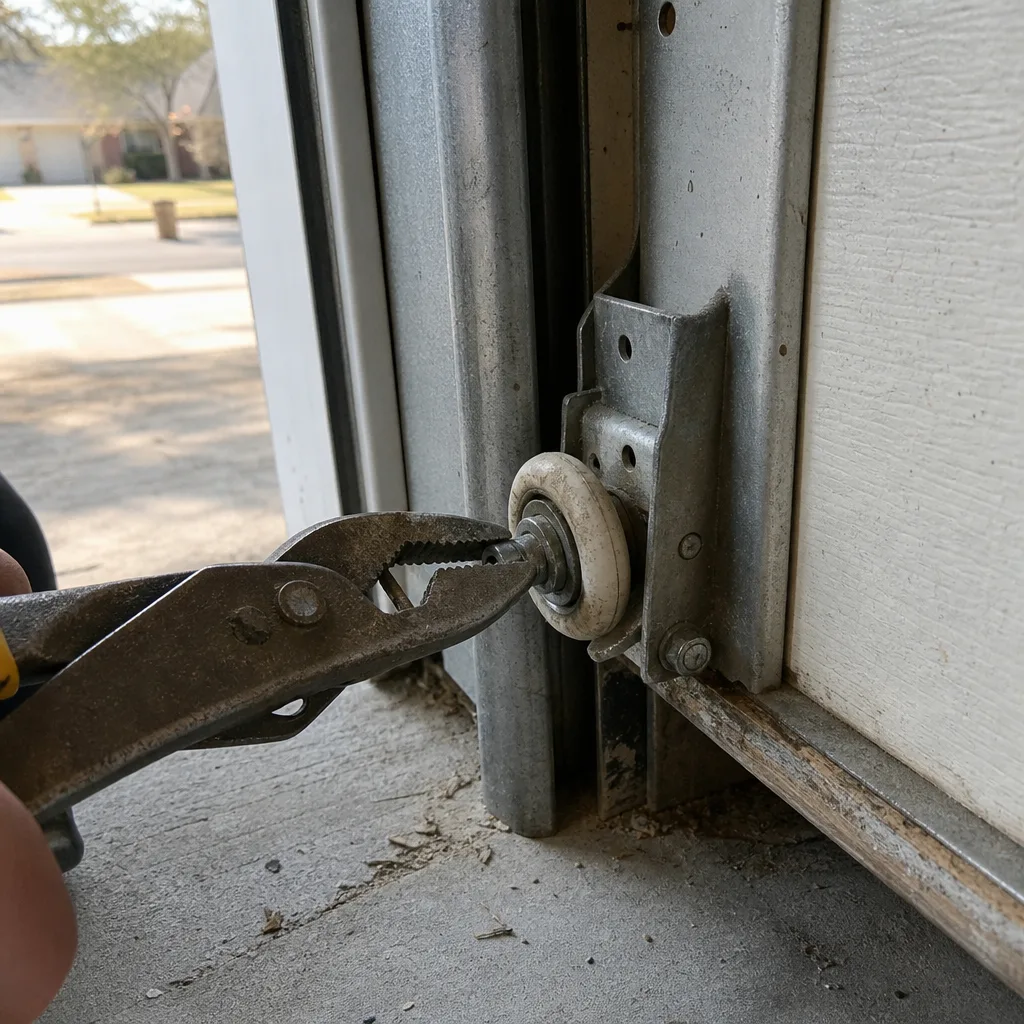
4. The rollers. Nylon or steel wheels that ride inside the tracks. They wear flat spots over time and get noisy before they fail.
5. The hinges. Connect the panels and allow the door to articulate as it curves from vertical to horizontal. Hinges at the bottom and middle of the door carry the most load.
6. The panels. The visible face of the door. Steel, aluminum, or wood composite. Panel damage is usually impact-related, but rust and corrosion also take a toll.
7. The bottom seal. The rubber or vinyl strip along the bottom edge that seals the gap between the door and the floor.
8. The opener and its safety systems. The motor, the rail, the carriage, and the safety sensors that reverse the door if something is in its path.
When something goes wrong, the symptom rarely points directly at the failed part. A door that won’t close could be a misaligned safety sensor, a bent track, or a snapped cable. That’s why diagnosis matters as much as repair. Westchase Garage Door Repair exists because garage doors are all we do, and that focus means we’ve seen every failure pattern these eight systems produce.
How Westchase Humidity Changes the Failure Timeline
Westchase sits in the Gulf Coast climate zone, which means sustained humidity for most of the year and mild winters that never really dry things out. That combination accelerates certain failure modes and slows others, and it produces a wear pattern that differs noticeably from what you’d see in a dry climate like Arizona or a cold climate like Minnesota.
The biggest difference is corrosion. Steel springs, cables, tracks, and hinges all rust faster in a humid environment. In a dry climate, a torsion spring might last well past its rated cycle count because corrosion never gets a foothold. In Westchase, humidity works on the wire surface constantly, and pitting corrosion creates stress risers that shorten spring life. Cables corrode from the inside out, and a cable that looks fine on the outside can be compromised within. Track rust creates drag that puts extra load on the opener and the springs, which shortens the life of both.
What this means in practice:
- Springs may fail earlier than their cycle rating suggests. A spring rated for a certain number of cycles may not reach it in a humid climate because corrosion weakens the wire before the cycle count catches up.
- Cables need visual inspection more often. Look for fraying, rust staining, or a cable that’s riding unevenly on the drum.
- Tracks benefit from periodic cleaning and lubrication. A dry silicone-based lubricant on the track and rollers reduces drag and slows surface rust.
- Hinges and bottom brackets are rust hot spots. They’re low to the ground, they collect moisture, and they’re often the first parts to seize.
This is one reason brand fluency matters. A Clopay door and a Wayne Dalton door use different hinge and roller specifications, and the parts that corrode first aren’t always the same. Knowing the brand tells us what to inspect first and what to have on hand. Westchase Garage Door Repair stocks and sources OEM-compatible parts for the eight brands that dominate residential driveways here, which means most corrosion-related repairs can be diagnosed and resolved in one visit instead of two.
Why Slab-On-Grade Construction Affects Your Bottom Seal
Most homes in Westchase are built on slab-on-grade foundations, which is standard for this part of Texas. That matters for your garage door in a way most homeowners never think about: the bottom seal sits directly on a concrete slab that’s in contact with the ground, and that slab moves, settles, and holds moisture differently than a raised foundation would.
The concrete slab in a Westchase garage is typically poured with a slight slope toward the exterior for drainage. Over time, that slope can become uneven as the slab settles, and the bottom seal can’t compensate for a gap that opens up on one side. You end up with a door that looks closed but leaks air, water, and insects along one edge. During heavy Houston-area rain, water can pool at the threshold and work its way under the seal.
Homes with crawl-space foundations don’t have this issue in the same way because the floor framing sits above grade and the threshold is usually built up. In Westchase, the seal is doing its job against a slab that’s never perfectly flat and never perfectly dry.
Options for dealing with an uneven slab threshold:
- Replace the bottom seal with a thicker profile. A taller seal can bridge small gaps that a standard seal can’t reach.
- Add a threshold seal. A raised rubber threshold that mounts to the floor and gives the door something to press against. This works well when the gap is consistent across the width of the door.
- Adjust the door’s close limit. Sometimes the door simply isn’t traveling far enough down, and the opener’s limit switch needs adjustment. This is a quick fix but shouldn’t be used to compensate for a seal that’s already worn out.
- Address slab settlement if it’s significant. If the slab has settled enough that the gap is larger than any seal can bridge, the threshold itself may need attention. That’s a different trade, but we can tell you when that’s the case.
Bottom seal replacement is one of the simplest and least expensive repairs on the list, and it pays off quickly in energy efficiency and pest exclusion. It’s also one of the most commonly neglected. If you can see daylight under your door, the seal needs attention.
HOA Rules and What They Mean for Replacement
Westchase has a high concentration of deed-restricted subdivisions, and many of them have HOA architectural review requirements that govern what your garage door can look like. This is a real constraint on replacement decisions, and it’s one that catches homeowners off guard when they start shopping for a new door.
Typical HOA restrictions in Westchase-area subdivisions include:
- Color restrictions. Many associations require the garage door to match or complement the home’s trim or body color, and some maintain an approved palette.
- Material restrictions. Some subdivisions require a specific material, such as steel or wood composite, and prohibit certain panel styles or finishes.
- Window and panel style rules. Carriage-house style windows, raised-panel vs. flush-panel designs, and decorative hardware may all be governed by the architectural guidelines.
- Architectural review before installation. Most HOAs require an application and approval before you install a new door. Installing without approval can result in a fine or a requirement to remove and replace at your own expense.
The practical takeaway is simple: check with your HOA before you choose a door, not after. Get the architectural guidelines in writing and confirm the approval process and timeline. If you’re working with a contractor who hasn’t dealt with HOA review before, that’s a red flag. A garage door specialist who works in Westchase regularly knows which subdivisions have which restrictions and can help you choose a door that meets the guidelines without a second application.
Once the door type is approved, the installation itself is straightforward. garage door installation is a measured, scheduled job: we take precise measurements, order the specific door the HOA approved, and install it in a single visit once it arrives. The written estimate sets the price before any work begins, and if the HOA requires documentation of the approved model, we can provide the specifications.
Brand Prevalence and Regional Failure Patterns in Westchase
Walk any street in Westchase and you’ll see the same handful of brands over and over. The homes here were built over a span of years by a limited number of builders, and those builders used a narrow set of suppliers. The result is that eight brands account for virtually every residential door and opener in the area.
On the door side, Clopay and Amarr are the most common. Clopay steel doors are everywhere in Westchase subdivisions, and their hinge and roller assemblies have a specific failure pattern in this climate: the bottom hinge and the hinge at the panel seam tend to corrode and seize first because they sit closest to the humid slab. Amarr doors are also widely installed, and their panel profiles can develop seal issues at the section joints as the door ages. Wayne Dalton doors show up frequently on newer construction, and their torsion systems need to be checked for cable wear, particularly at the drum.
On the opener side, LiftMaster, Chamberlain, Genie, and Craftsman cover most of what’s installed in Westchase. LiftMaster and Chamberlain are the same parent company and share a lot of internal architecture, which means a technician who knows one knows the other. Genie openers have a different gear and rail design, and their screw-drive units wear in a distinctive way. Craftsman openers are legacy hardware at this point, and many are still running because they were built to last, but parts availability is the limiting factor when they fail. Raynor rounds out the list and shows up on some of the older doors in the area.
What this means for you: there’s almost no residential system in Westchase that we haven’t worked on. Eight brands, one specialist. That range matters when you need a part today, not next week, and it matters when the symptom you describe points to a failure mode specific to your brand.
Opener Technology: Legacy Systems vs. Smart Platforms
Garage door openers have changed more in the last decade than in the previous three. If your opener was installed before the smart-home era, it’s a different machine from what’s available now, and understanding the difference helps you decide whether to repair what you have or move to a current platform.
Legacy analog systems, like the Craftsman openers still running in many Westchase garages, are straightforward machines. They use a fixed-frequency remote, a simple logic board, and mechanical limit switches. They’re repairable, and when they fail the failure is usually physical: a worn gear, a bad capacitor, a stripped trolley, or a logic board that’s reached the end of its life. Parts for older Craftsman units can be hard to find, which is the main reason a repair might not make sense. But if the parts are available, these openers can run for a long time.
Modern smart-home-integrated platforms, like current LiftMaster and Chamberlain models, are a different story. They use encrypted rolling-code remotes, a belt or chain drive with a DC motor, and a control board that connects to your home network. They support app control, scheduling, and integration with home automation systems. They also have more sophisticated safety systems and battery backup options.
The repair decision usually comes down to three questions:
- Is the failure mechanical or electronic? A stripped gear or a broken spring in the opener’s rail assembly is usually worth repairing. A failed logic board on an older unit may not be, depending on parts availability.
- How old is the unit? Openers have a service life, and once a unit is past it, you’re repairing a machine that’s likely to fail again in a different way.
- Do you need the features? If you want app control, quiet operation, or battery backup, a new opener is the only way to get them. If you just want the door to go up and down, repair is often the right call.
garage door opener repair is a core part of what we do, and it covers both ends of that spectrum. A LiftMaster logic board replacement and a Craftsman gear replacement are different jobs, but they’re both jobs we handle. Diagnosis comes first. We’ll tell you what’s wrong and whether repair makes sense before you commit to anything.
Repair or Replace? A Decision Framework
This is the question homeowners ask most often, and the honest answer is that it depends on the door’s overall condition rather than any single failure. A repair that extends a healthy system’s life is money well spent. A repair that delays an inevitable replacement is money you’ll spend twice.
Here’s the framework we use:
Repair is usually the right call when:
- The failure is isolated to one or two components (a spring, a cable, a roller set, a bottom seal).
- The door’s panels are structurally sound with no significant rust, delamination, or impact damage.
- The tracks are straight and the door runs smoothly aside from the failed component.
- The opener is functioning and doesn’t need to be replaced for other reasons.
Replacement is usually the right call when:
- Multiple major components are failing at the same time, which suggests the system as a whole is at the end of its service life.
- The panels have rust-through, delamination, or structural damage that can’t be repaired.
- The tracks are bent or the door has come out of alignment in a way that can’t be corrected.
- You’re facing a repair bill that’s a significant fraction of the cost of a new door, and the door itself is aging.
- The door doesn’t meet current safety standards, particularly if it lacks a working safety reverse system.
There’s a middle path, too. Sometimes the door is fine but the opener is failing, or vice versa. Replacing one without the other is common and often makes sense. The key is to get an honest assessment of the whole system, not just the part that failed. garage door repair starts with that assessment, and the written estimate covers the work before it begins.
What Routine Care Actually Prevents
Garage door maintenance isn’t complicated, and it isn’t a subscription service. It’s a short list of things a homeowner can check and a few things that need a technician. The goal is to catch wear before it becomes a failure.
What you can do yourself:
- Test the safety reverse monthly. Place a roll of paper towels or a piece of wood in the door’s path and close it. The door should reverse on contact. If it doesn’t, the opener’s safety system needs attention.
- Check the bottom seal for gaps. Look for daylight or feel for air movement along the bottom edge. A worn seal lets water and insects in.
- Listen for changes in noise. A door that’s getting louder is telling you something is wearing. Squealing rollers, grinding tracks, and popping sounds are all worth investigating.
- Look at the cables. Frayed, kinked, or rust-stained cables need professional attention.
What needs a technician:
- Spring inspection and replacement. Springs are under extreme tension. This is not a visual inspection you do yourself beyond noting whether the door is balanced. If the door feels heavy or won’t stay open, the springs need attention.
- Cable replacement. Cables are under tension too, and a snapped cable can whip. This is professional work.
- Track alignment and hinge replacement. These require the right tools and an understanding of how the door articulates.
- Opener service. Gear replacement, logic board diagnosis, and safety sensor alignment are all technician work.
A door that’s balanced and quiet is a door that’s working correctly. If yours isn’t, the earlier you address it, the less it costs.
Common Mistakes to Avoid
- Attempting spring replacement yourself. This is the single most dangerous mistake a homeowner can make. Torsion springs store enough energy to cause serious injury, and the tools required to wind them safely aren’t in most garages. Springs are the highest-injury-risk component in the system, and they need a trained technician.
- Using WD-40 on the tracks. It attracts dust and grit, which turns into a grinding paste that wears the rollers and tracks. A dry silicone lubricant is the right choice for tracks and rollers in a humid climate like Westchase’s.
- Choosing a door before checking HOA rules. Westchase subdivisions have architectural review requirements, and installing a door without approval can mean removing it. Get the guidelines in writing first.
- Ignoring the bottom seal. A worn seal lets water, insects, and humid air into the garage, which accelerates rust on every metal component inside. In a Westchase garage, that matters more than it does in a dry climate.
- Assuming a noisy door is normal. It isn’t. Noise is a symptom of wear. Addressing it early prevents the wear from spreading to the springs and opener.
- Using a general handyman for spring or opener work. A generalist may be competent at many things, but the spring work and opener electronics on a modern garage door system are specialty work. A specialist who carries the right parts and knows the brand-specific failure modes resolves the problem in one visit.
- Replacing the door when the opener is the problem. And vice versa. Get a full-system assessment before you commit to a replacement.
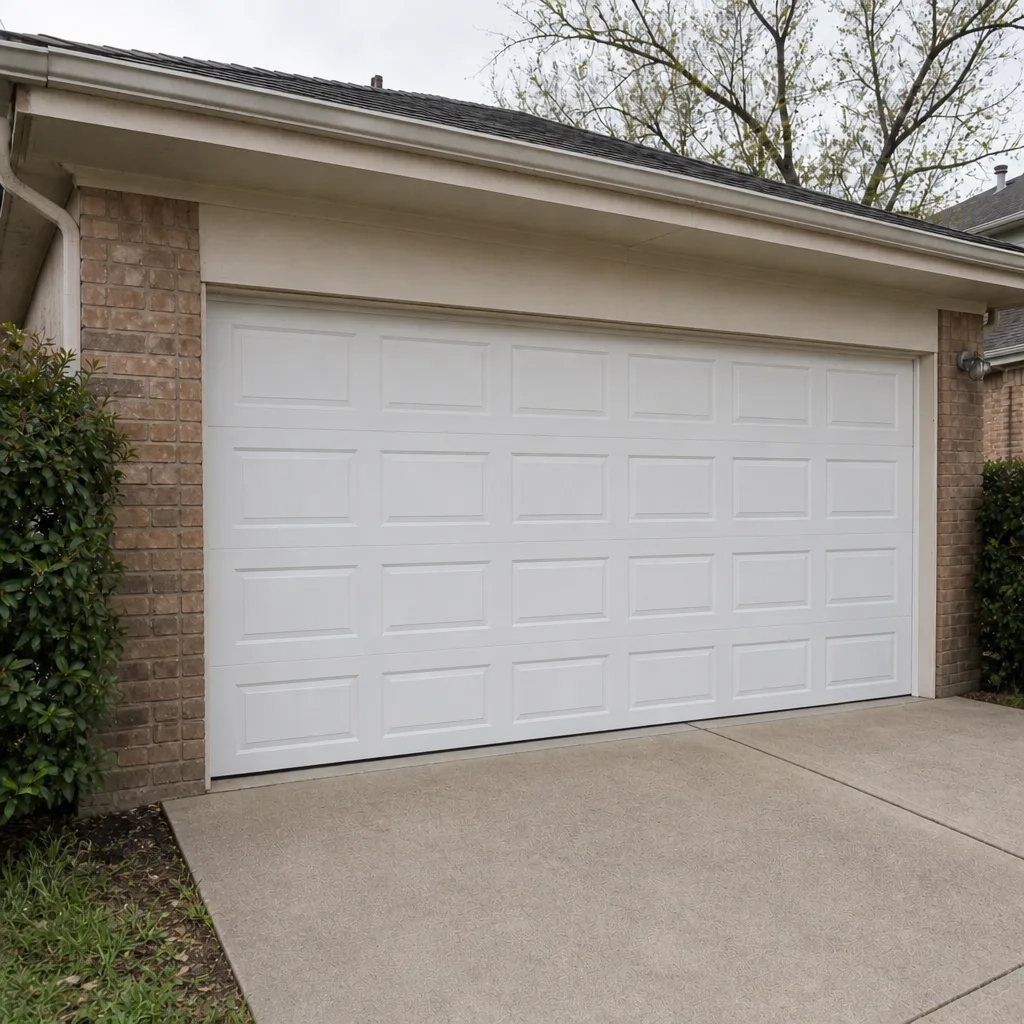
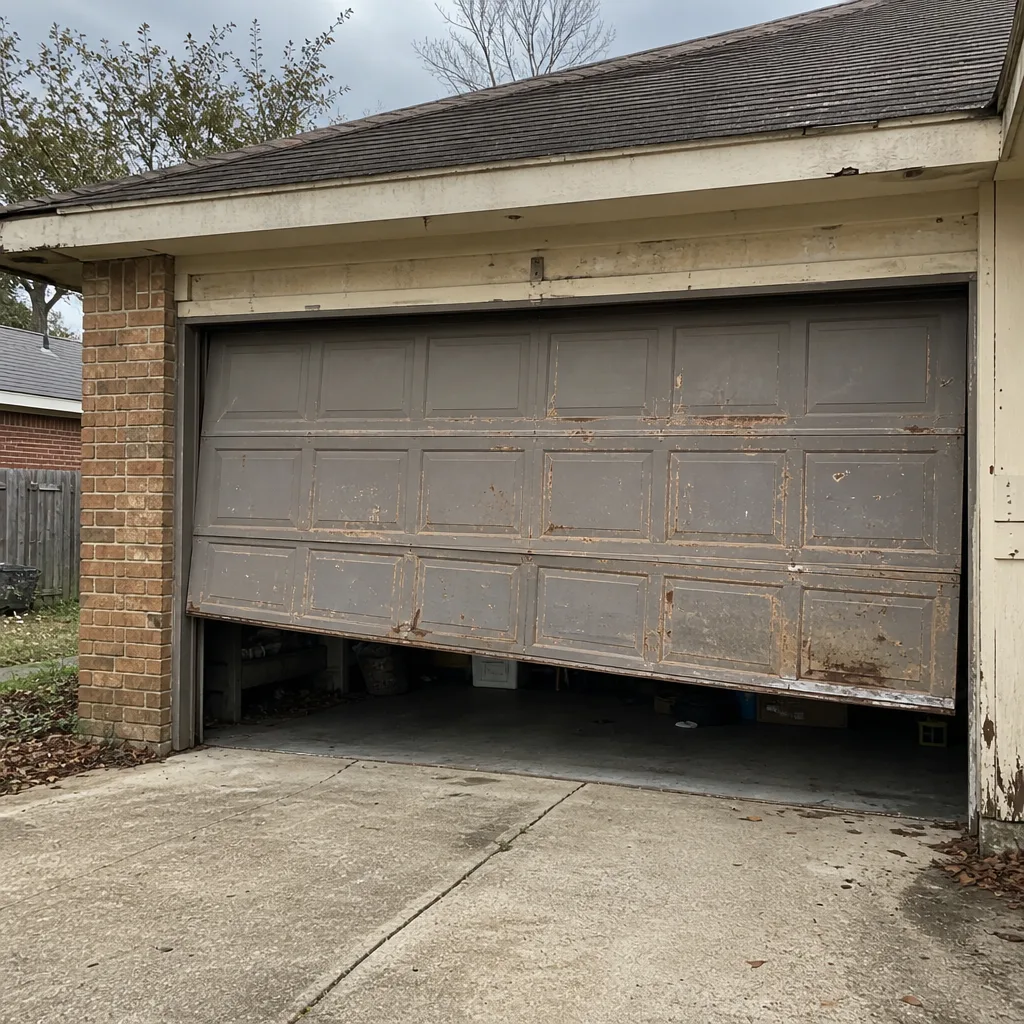
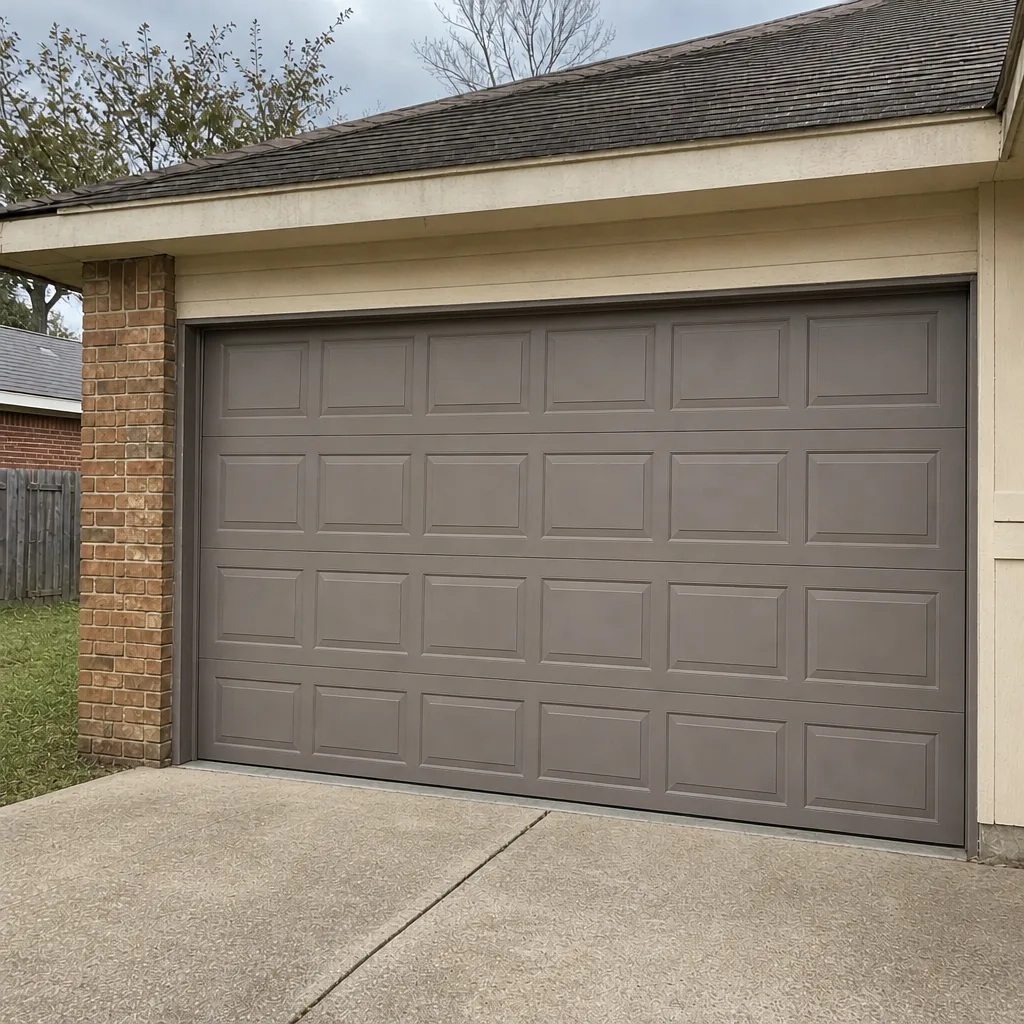
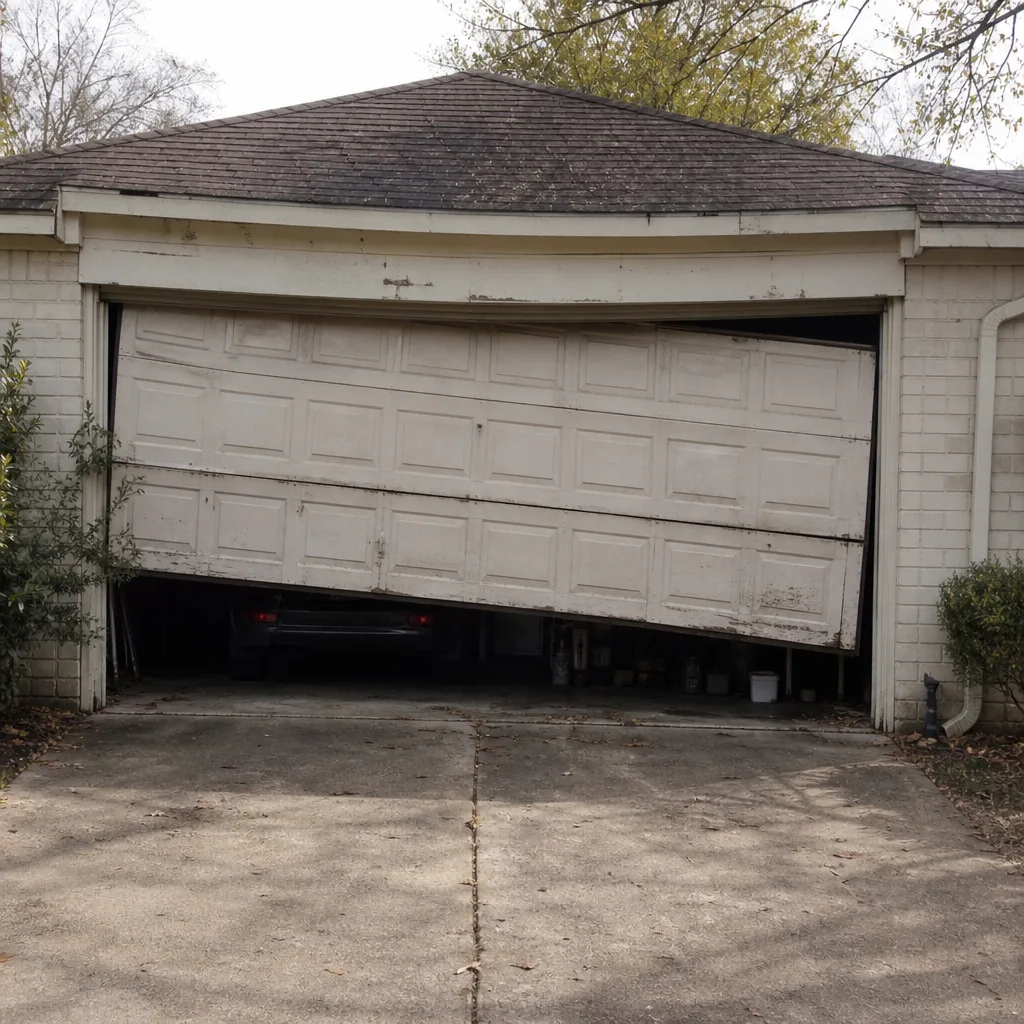
See the difference
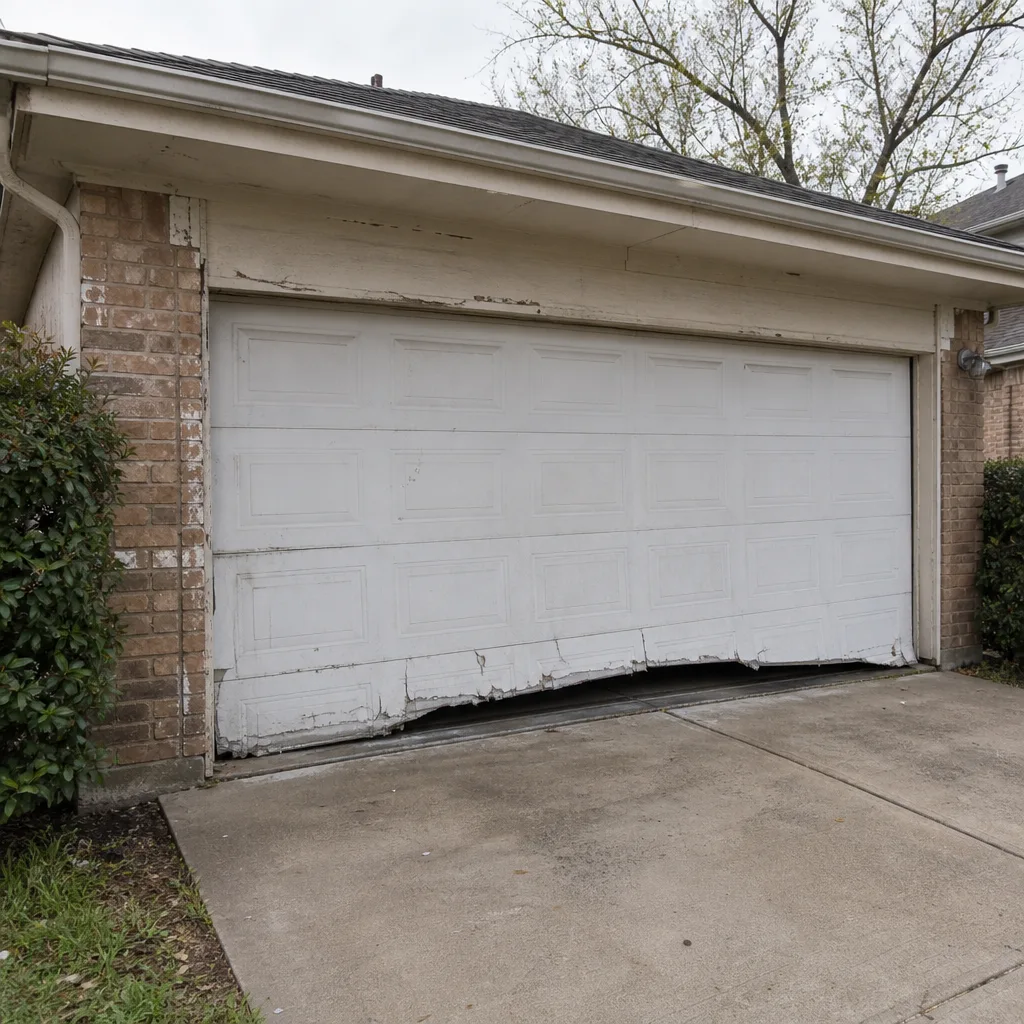 Before
 After
 Before
 After
 Before
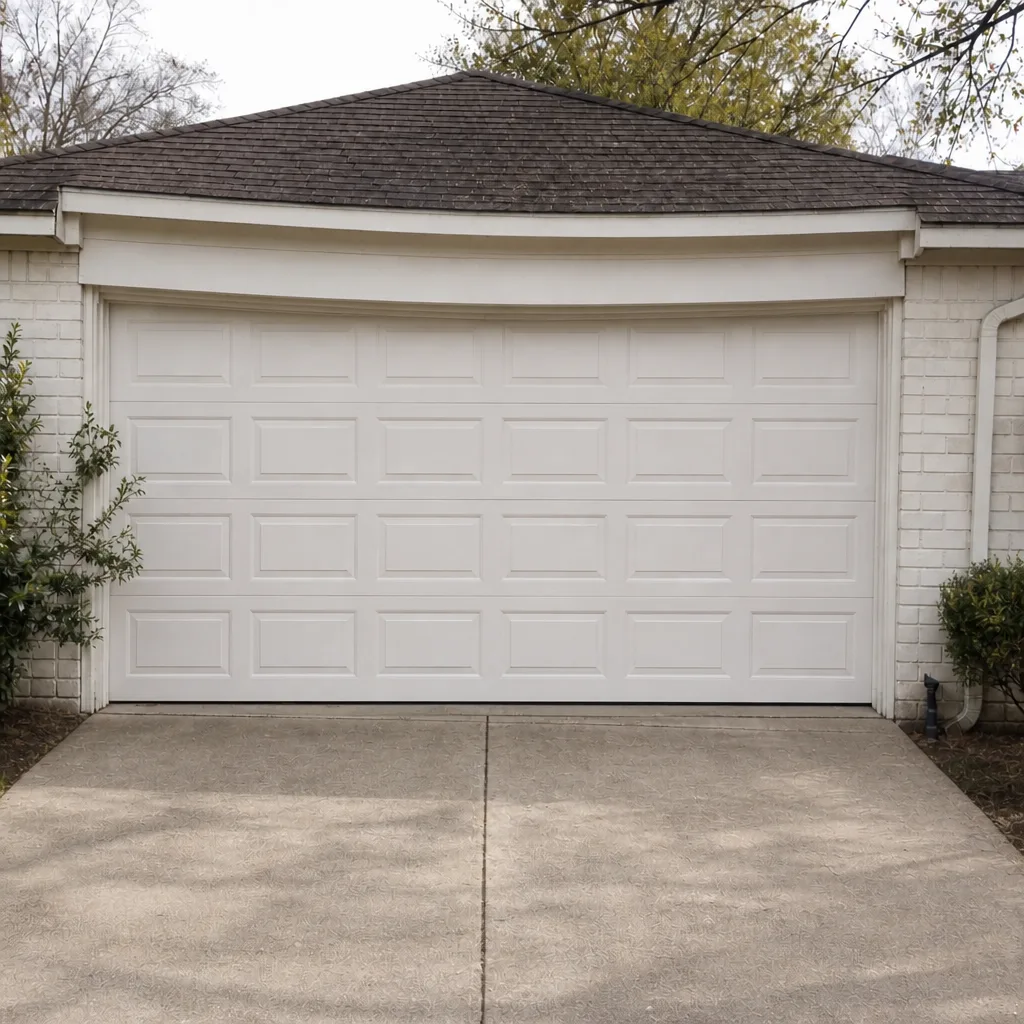 After
When to Call a Professional
Some garage door problems are diagnostic puzzles. Others are obvious. You should call a professional in any of these situations: the door won’t open or close at all; a spring is visibly broken (a gap in the coil); the door is unbalanced and won’t stay halfway open; the cables are frayed or loose; the door has come off the tracks; the opener is making grinding or humming sounds without moving the door; the safety reverse system doesn’t work when you test it; or the door has been hit and the panels or tracks are damaged. Any of these is a call-now situation, and a couple of them (broken springs, snapped cables) are genuinely dangerous to leave. Westchase Garage Door Repair offers free estimates in Westchase – call (866) 690-3896. We answer 24/7. Fast dispatch from 7am to 7pm, Sunday through Friday.
Frequently Asked Questions
Spring repair is priced per spring, and most doors have a matched pair that’s replaced together. The cost depends on the spring type and the door’s configuration. We give a written estimate before any work starts, and that estimate sets the price. Call (866) 690-3896 for an exact quote – estimates are free.
For repair calls, same-day service is often available. We answer 24/7 and dispatch Sunday through Friday, 7am to 7pm. If you call outside those hours, we’ll book you into the next opening. Call (866) 690-3896 to check availability.
No. The written estimate is the price. We quote before any work begins, and the number on the estimate is the number you pay. That’s true for repairs, opener service, and installation. Call (866) 690-3896 for a free estimate.
The local professionals we connect you with are licensed and insured as Texas requires. We work with vetted independent technicians who specialize in garage door systems. Call (866) 690-3896 to discuss your project.
Humidity accelerates corrosion on springs, cables, tracks, and hinges, which shortens their service life compared to dry climates. It also makes the bottom seal a more critical component because moist air entering the garage speeds up rust on every metal part inside. Regular lubrication and seal checks are the best defense.
In most Westchase-area subdivisions with deed restrictions, yes. You’ll need to get the architectural guidelines in writing, choose a door that meets the color and material restrictions, and submit an application before installation. We can help you choose a door that fits the guidelines.
The Bottom Line
Your garage door is eight systems, not one, and in Westchase three of those systems – springs, tracks, and bottom seals – wear faster because of humidity and slab-on-grade construction. Brand matters because failure patterns are specific, and HOA rules shape what you can install. Most problems are repairable in a single visit, and the decision between repair and replacement comes down to the overall health of the door rather than any one failure. If you’re facing a problem you can’t diagnose, or a symptom that points to springs or cables, call a specialist. The estimate is free and the price is set before work starts.
Call Westchase Garage Door Repair at (866) 690-3896 for a free estimate on any garage door repair, opener service, or installation in Westchase. We answer 24/7. Fast dispatch from 7am to 7pm, Sunday through Friday.
Written by the team at Westchase Garage Door Repair.